ETH price up 10% in April, so why is Ethereum Foundation selling?
Ether (ETH) has surged more than 10% in April, reaching as high as $2,430 in April amid renewed market optimism.
Yet during the same period, the Ethereum Foundation, a nonprofit overseeing the Ethereum protocol’s development, has continued notable treasury sales.
In early April, the Foundation sold 5,000 ETH for roughly $11 million in DAI. This was followed by a larger 10,000 ETH OTC sale to Tom Lee’s Bitmine at an average price of $2,387, raising approximately $23.9 million.
The sales are not reactions to price action but follow a disciplined Treasury Policy adopted in June 2025.
The Foundation maintains fiat and stablecoin reserves equal to roughly 2.5 years of operating expenses. Periodic ETH sales replenish these reserves to fund protocol development, research, grants, and ecosystem support.
In 2026 alone, the Foundation has sold approximately 20,000 ETH, raising over $45 million. It still holds around 92,500 ETH (~$215 million) in its liquid treasury, plus 53,000 ETH staked, according to data resource Arkham Intelligence.
Trump’s official memecoin extends slide as he hosts exclusive investor gala
US President Donald Trump’s official TRUMP memecoin extended its decline on Saturday, even as he hosted a closed-door gathering for top holders of the cryptocurrency at his Mar-a-Lago estate in Florida.
The token is currently trading at around $2.30, according to data from CoinMarketCap.
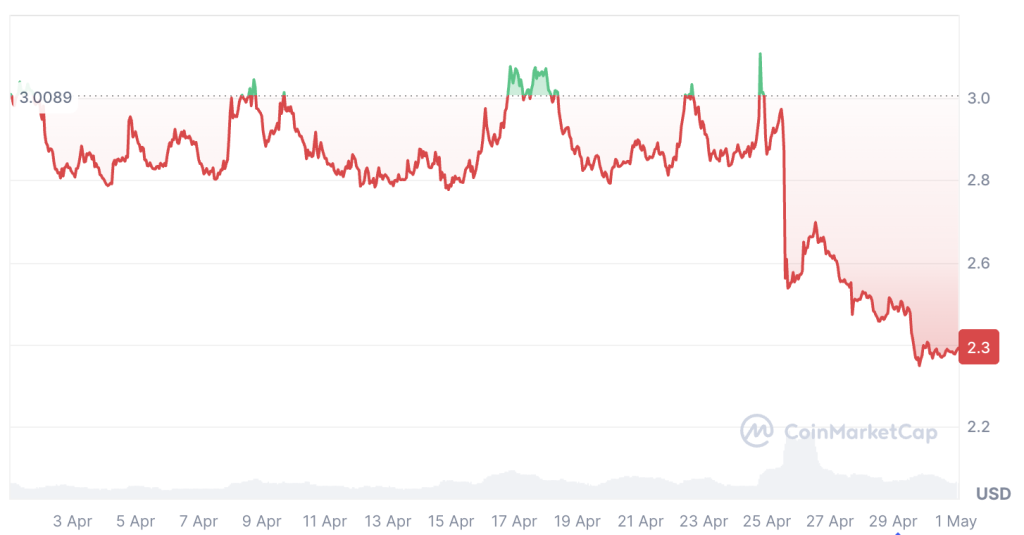
It is also down by more than 96% compared to its all-time high of $75.35 registered in early 2025.
The downturn comes despite efforts to maintain visibility through high-profile events. The Saturday event brought together 297 of the largest TRUMP investors for what was billed as the “most exclusive” crypto and business conference, with a smaller group of 29 attending a VIP reception and champagne toast, according to The Independent.
A previous event tied to TRUMP holders took place in May last year, when Trump organized an earlier contest-style gathering at the Trump National Golf Club in Potomac Falls, Virginia, for the top 220 holders of his memecoin.
Bitcoin futures signal caution as long-to-short ratio signals positioning shift
Bitcoin (BTC) was rejected at $77,800 on Wednesday, then retested the $76,000 level. This movement followed a correction in the S&P 500 Index as the war in Iran reached its 60-day mark, driving crude oil prices toward $118. While demand for leveraged bearish Bitcoin futures positions increased, the long-to-short ratio of whales at major exchanges indicates a different trend.
Bitcoin’s lack of bullish momentum above $78,000 mirrored the S&P 500 Index’s struggle near 7,200. Trader skepticism stems in part from the inflationary impact of high energy prices, which diminishes consumer spending and corporate earnings through higher logistics costs.
Additionally, investors are questioning the profitability of technology companies’ investments in AI, according to Yahoo Finance.
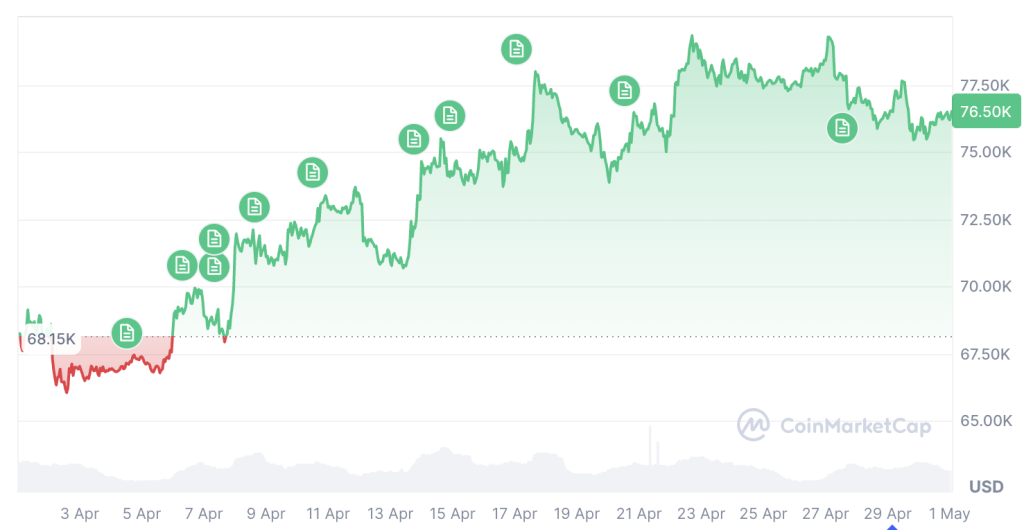
Setting aside the specific reasons for investor caution, the Bitcoin perpetual futures funding rate turned negative on Wednesday. This followed a brief neutral-to-bullish period on Tuesday. In a healthy market, this rate usually stays between 6% and 12% to cover capital costs, which means buyers typically pay a fee to maintain their positions. A negative rate suggests a shift toward sellers.
Read also
Bitcoin recovery stalls after Fed holds interest rates, citing ‘uncertainty’ in Middle East
Bitcoin’s volatility mid week came amid macro uncertainty after the Federal Open Market Committee (FOMC) minutes confirmed the Fed’s decision to hold “the target range for the federal funds rate at 3-½ to 3-¾ percent.”
While the Fed maintains its goal of achieving “maximum employment and inflation at the rate of 2 percent over the longer run,” the FOMC minutes cited the “developments in the Middle East” as factors fueling an environment of “uncertainty” and the Fed stressed its desire to maintain optionality as it evaluates the “risks to both sides of its dual mandate.”
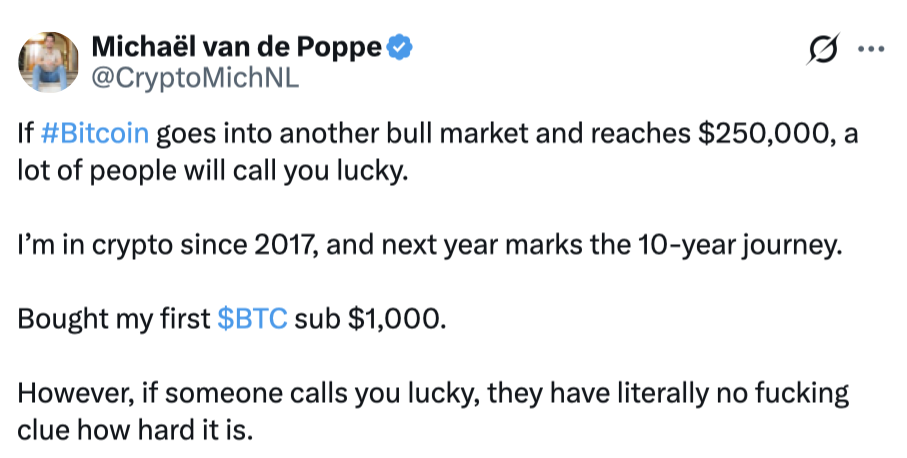
The Fed’s hold on rates aligned with market expectations, but Bitcoin remained fragile throughout Chairman Jerome Powell’s presser.
Hyblock CEO Shubh Varma described the price action as “the usual sell the news reaction after the FOMC,” but also noted that BTC “quickly recovered to pre-announcement levels within hours, showing strong underlying conviction.”
Read also
XRP set for ‘strongest’ 2026 monthly ETF inflows as bulls target $2
Several market and technical factors suggest that the XRP/USD pair may climb further as long as key support levels hold.

It comes as XRP spot ETFs are gaining steady momentum again, with the latest inflows showing that investor demand is not just returning but holding firm at elevated levels.
These investment products posted inflows in 11 of the last 13 days, totaling $82.42 million, according to data from SoSoValue.
XRP ETFs have already pulled in $83.9 million in net inflows in April, marking a strong rebound from March’s $31.16 million outflow.
This reversal makes April the “strongest monthly inflow since December 2025,” signaling a notable shift in momentum, analyst Xfinancebull said in a Monday post on X, adding:
“That does not guarantee instant price fireworks, but it absolutely tells me the bid for regulated $XRP exposure is still alive and building.”
Subscribe
The most engaging reads in blockchain. Delivered once a
week.


Ciaran Lyons
Ciaran Lyons is a Cointelegraph staff writer covering cryptocurrency markets and conducting interviews within the digital asset industry. He has a background in mainstream media and has previously worked in Australian broadcast journalism, including roles in national radio and television. Prior to joining Cointelegraph, Lyons was involved in media projects across news, documentary, and entertainment formats. He holds Solana, Ski Mask Dog, and AI Rig Complex above Cointelegraph’s disclosure threshold of $1,000.
Disclaimer
Cointelegraph Magazine publishes long-form journalism, analysis and narrative reporting produced by Cointelegraph’s in-house editorial team with subject-matter expertise.
All articles are edited and reviewed by Cointelegraph editors in line with our editorial standards.
Content published in Magazine does not constitute financial, legal or investment advice. Readers should conduct their own research and consult qualified professionals where appropriate. Cointelegraph maintains full editorial independence.