
Key Takeaways
- Iran kept the Strait of Hormuz shut on June 11 even as Trump claimed a U.S.-Iran deal was reached.
- The waterway carries about 20% of global energy; its closure has pushed oil and inflation higher.
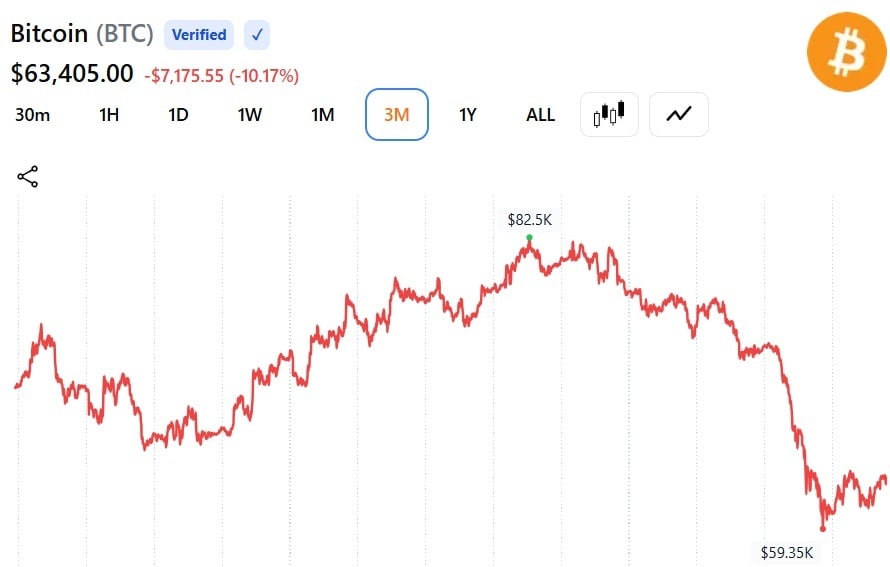
- Bitcoin traded near $63,400 on June 11, recovering from a $60,914 low as de-escalation hopes rose.
Conflicting Claims
Trump said during a tele-rally that the U.S. had “made a great deal” with Iran, but Tehran did not confirm any agreement. The mixed signals captured a tense, fast-moving standoff with public broadcaster NPR reporting that Trump canceled planned strikes on Iran while saying a deal would be “finalized” soon. With one side declaring peace and the other insisting the blockade holds, markets are left to price a conflict whose status changes by the hour.
The Strait of Hormuz is a chokepoint for about 20% of the world’s energy supply, making it one of the most economically sensitive waterways on the planet. Iran’s military command declared an indefinite closure on June 10 after U.S. airstrikes, threatening to fire on any vessel that tried to pass.
Traffic has been at a near-standstill for weeks, with the disruption sending oil and gasoline prices higher and helping push U.S. inflation to a multi-year high, tightening financial conditions for risk assets, crypto included.
Bitcoin’s Wild Round Trip
Crypto markets have whipsawed with each headline and Bitcoin.com News reported that Trump’s recent warning about the U.S. “taking Kharg Island” put oil, stocks and bitcoin on high alert. BTC, for instance, slid to a session low of $60,914 before rebounding about 2.3% on June 11 to trade near $63,000, as traders weighed the prospect of a settlement against the reality of a still-shuttered strait. The token remains down roughly 30% in 2026, leaving it sensitive to macro shocks that drain liquidity from speculative markets.
For crypto, the conflict is not only a price story because an earlier Bitcoin.com News investigation detailed how sanctioned trade around the strait has leaned on stablecoins, a reminder that geopolitical chokepoints increasingly intersect with onchain flows.
A signed, confirmed settlement could reopen the Strait of Hormuz and strip out the war-risk premium weighing on oil and equities, a backdrop that has historically helped bitcoin recover once uncertainty clears. But absent confirmation from Tehran, the market stays hostage to competing claims. Until shipping traffic visibly resumes, traders are likely to treat every Trump post and Iranian statement as a fresh catalyst (and bitcoin’s price as a real-time gauge of who is winning the narrative).


