How crypto funds shape the development of the digital asset market

A crypto fund is an investment fund that primarily focuses on investing in cryptocurrencies or digital assets. It allows investors to gain exposure to the crypto market without having to purchase individual coins or tokens themselves. Instead, these funds pool money from multiple investors to purchase various cryptocurrencies, often including Bitcoin (BTC), Ether (ETH) and other popular tokens. Crypto funds can also be categorized based on their investment strategies. For instance, some funds may invest exclusively in Bitcoin, while others may invest in a diverse range of cryptocurrencies or focus…

Bit Digital turns to Iceland as a tax haven for crypto

In response to the Biden administration’s proposed crypto mining tax, Bit Digital has strategically moved a significant portion of its mining machines to Iceland and Canada while keeping the majority within the United States. The company’s decision to establish a presence in Iceland reflects its proactive approach to navigating the potential impact of the proposed tax legislation on its operations. Moving beyond the United States Bit Digital, under the leadership of CEO Samir Tabar, has made a noteworthy investment of $5 million to secure 2,500 bitcoin mining machines, as reported…

Bitcoin production growth and capital strategy guiding Marathon Digital: CEO

A combination of more hash rate coming online from mining plants and a price protection approach is shielding Bitcoin mining firm Marathon Digital Holdings through the bear market, CEO Fred Thiel told Cointelegraph.  In an exclusive interview during the 2023 Bitcoin Conference in Miami, Thiel disclosed the strategy behind Marathon’s figures in the first quarter of 2023, when the firm reduced its net loss from $12.9 million ($0.12 per share) from Q1 2022 to $7.2 million ($0.05 per share) this year. Marathon is offsetting lower Bitcoin (BTC) prices with production increases. It reported a quarterly…

Asia-Based Digital Asset Firm HashKey Group in Early Stages of Raising $100M- $200M: Bloomberg

Please note that our privacy policy, terms of use, cookies, and do not sell my personal information has been updated. The leader in news and information on cryptocurrency, digital assets and the future of money, CoinDesk is a media outlet that strives for the highest journalistic standards and abides by a strict set of editorial policies. CoinDesk is an independent operating subsidiary of Digital Currency Group, which invests in cryptocurrencies and blockchain startups. As part of their compensation, certain CoinDesk employees, including editorial employees, may receive exposure to DCG equity…

Chamber of Digital Commerce calls for Congress to push US crypto regs

In a bid to advance America’s position in the digital finance landscape, the Chamber of Digital Commerce is urging the U.S. Congress to expedite the creation of a comprehensive legal framework for cryptocurrencies. In a move aimed at securing America’s place in the burgeoning world of digital finance, the Chamber of Digital Commerce is urging Congress to fast-track the development of a legal structure for cryptocurrencies. The advocacy group has proposed the establishment of a “Digital Asset and Blockchain Technology Solarium Commission”, a strategic initiative that would be tasked with…

Singaporean family office to set up digital bank in Bahrain

The Whampoa Group, a family office based in Singapore, will open a digital bank in Bahrain, the kingdom’s Economic Development Board said on May 18. The Group expects to open the bank by the end of the year and is aiming for a global client base. The bank will offer digital asset trading, custody and management among digital banking services. According to Bloomberg, the Central Bank of Bahrain has granted the bank “in principle approval” pending fulfillment of all requirements. Whampoa Group is associated with two prominent Singaporean Lee families —…

Senators Elizabeth Warren and Roger Marshall’s Digital Asset Anti-Money-Laundering Act Won’t Stop Money Laundering, But it Could Ban Crypto

If the Warren-Marshall legislation fails the necessary test, does it do more harm than good? After all, money laundering is terrible. Shouldn’t the legislation be passed even if it only helps on the margins? Here is where the harms of the legislation, namely requiring those that develop software and validate transactions on a blockchain to register as financial institutions, are so problematic. The problem is these individuals can’t practically register as a financial institution. The authors of this legislation know this and further know that requiring software developers and validators…

Galaxy Digital Executed its First OTC Options Trade as Demand for On-Chain Options Ramps Up

The ability to trade bilateral options tied to cryptocurrencies with Galaxy removes credit risk, which is normally associated with traditional OTC options trades, Galaxy said in a statement. This is because users send their collateral to a smart contract rather than to a counterparty, making the user less exposed to the counterparty and what they might be doing with one’s collateral. Source

Congressional crypto hearing illustrates political stalemate on digital assets

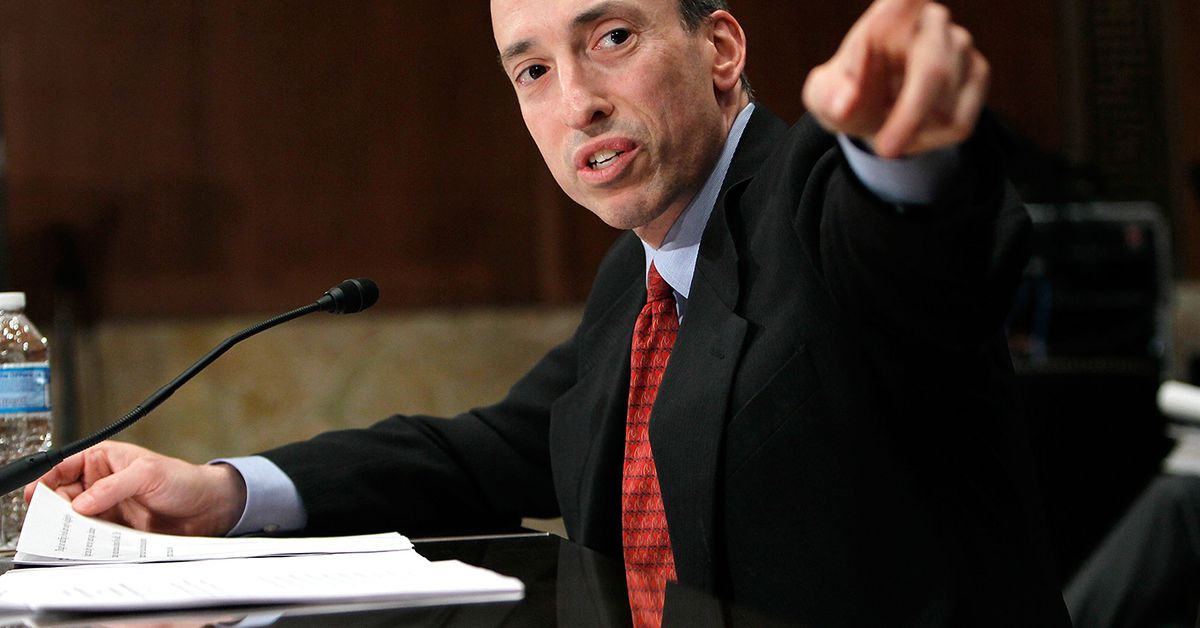
On May 10, the United States House of Representatives Financial Services Committee and Agriculture Committee held their first joint hearing on digital asset regulation. The event felt like a logical continuation of another recent hearing where representatives lambasted Securities Exchange Commission Chair Gary Gensler for perceived regulatory overreach.  The principal narrative, articulated by the hearing’s initiators, was that Congress should intervene with its own regulatory project to provide certainty, stop “regulation through enforcement” and address the competition between regulating agencies. But maybe it actually shouldn’t, believe many lawyers as well.…

Governor Ron DeSantis Bans Digital Dollar in Florida, Other States Prepare to Emulate Decision

The decision of Governor DeSantis to ban CBDCs in Florida has drawn criticism from some legal experts. Ron DeSantis, Governor of Florida recently signed a bill prohibiting the use of central bank-issued digital currencies (CBDCs) in the state. And now, his move may have set a precedent for other states to follow. For DeSantis and many more like him, a CBDC defeats the aim of decentralization being that it is controlled by a centralized entity – the government. They also argue that through CBDCs, governments may eventually be able to…