
The hopeful optimism of Bitcoin (BTC) traders seemed to dissipate in the first week of March as key on-chain metrics provided resistance.
Now Bitcoin price is threatening a retest of the $22,000 level and a wave of short sellers would stand to profit if that occurred. If the short sellers’ strike price hit, some analysts believe Bitcoin price could drop as low as $19,000.
A handful of analysts still project BTC price to hit $25,000 in the short-term, on-chain data highlighting a few reasons for price resistance at higher levels.
Realized price metric highlights profit-taking
Market participants’ concern over the Federal Reserve’s interest rate hikes and high inflation are heavy macro headwinds facing Bitcoin price and this has investors weighing the time value of money of BTC investments. To measure TVM on-chain, Bitcoin holders can be put into groups based on the amount of time they held BTC and average the acquisition cost.
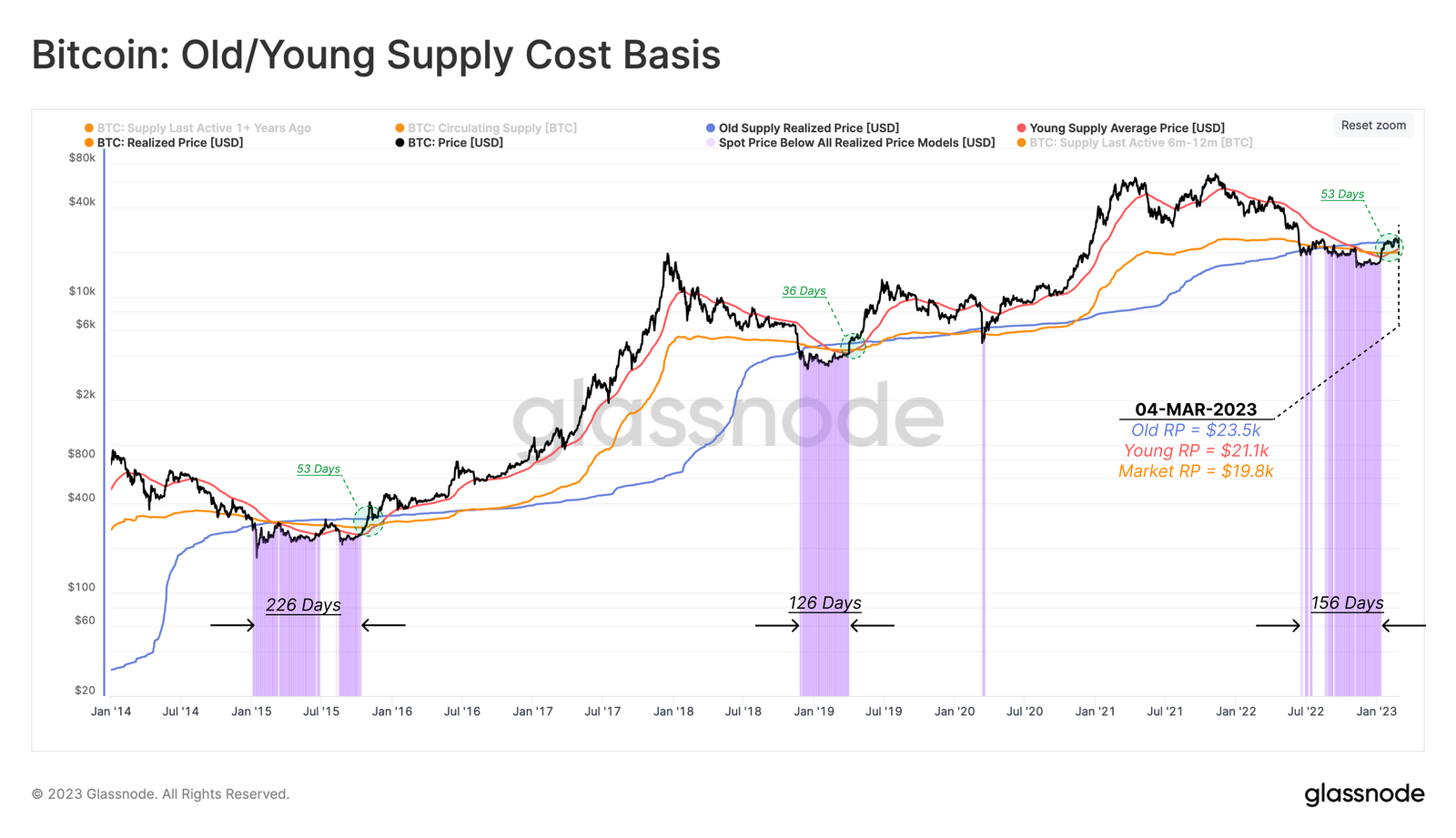
Investors that purchased BTC within the last 6-months benefited from the early bear market conditions and have an average realized price of $21,000, which places them in profit. The average market realized price across all BTC holders is $19,800, also currently in profit.
Conversely, BTC held for over 6 months has a higher realized price than the rest of the market groups at $23,500. When Bitcoin reaches above $23,500, the holders that have seen little TVM return for over 6-months potentially put pressure on a breakout as they get antsy to lock in profits.
Liquidity inflows increase but pale in comparision to 2022
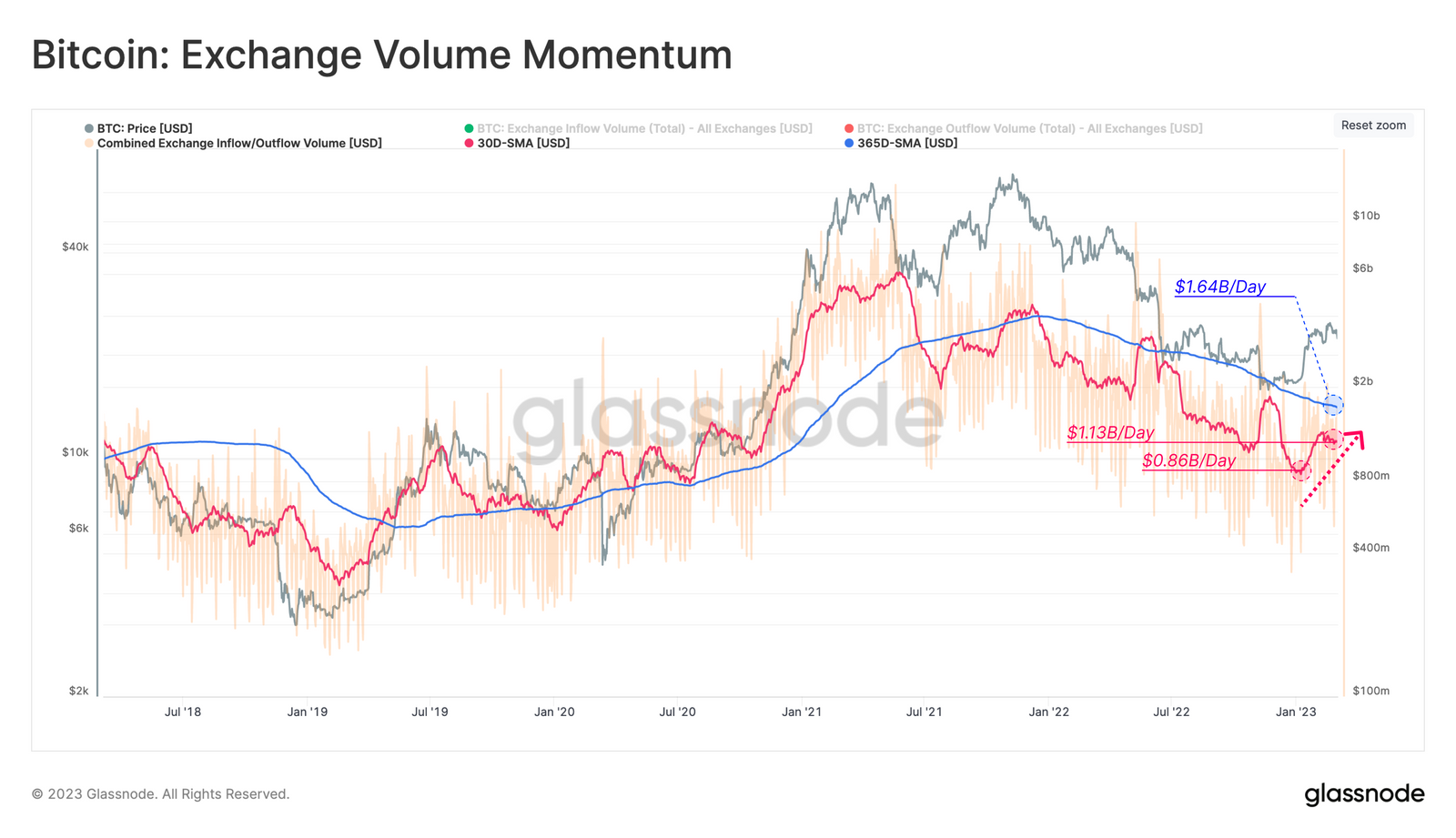
Bitcoin price is highly reactive to interest rates and the U.S. Dollar Index (DXY) which puts a strain on risk assets. The negative impact of these factors is great for short sellers butbad for Bitcoin price. The best way for the Bitcoin price to withstand short-seller pressure is for new long liquidity and spot buyers to enter the market.
Analyzing exchange net flows is a good way to measure new liquidity and currently this metric reflects a 34% uptick since the start of 2023, but it lags behind the yearly daily average of $1.6 billion.
Currently, the general consensus among analysts is that the ability to onboard new liquidity into the crypto market has been hindered by a crackdown on banks that support crypto-oriented businesses.
The uptick in unrealized Bitcoin profits mirrors previous cycles
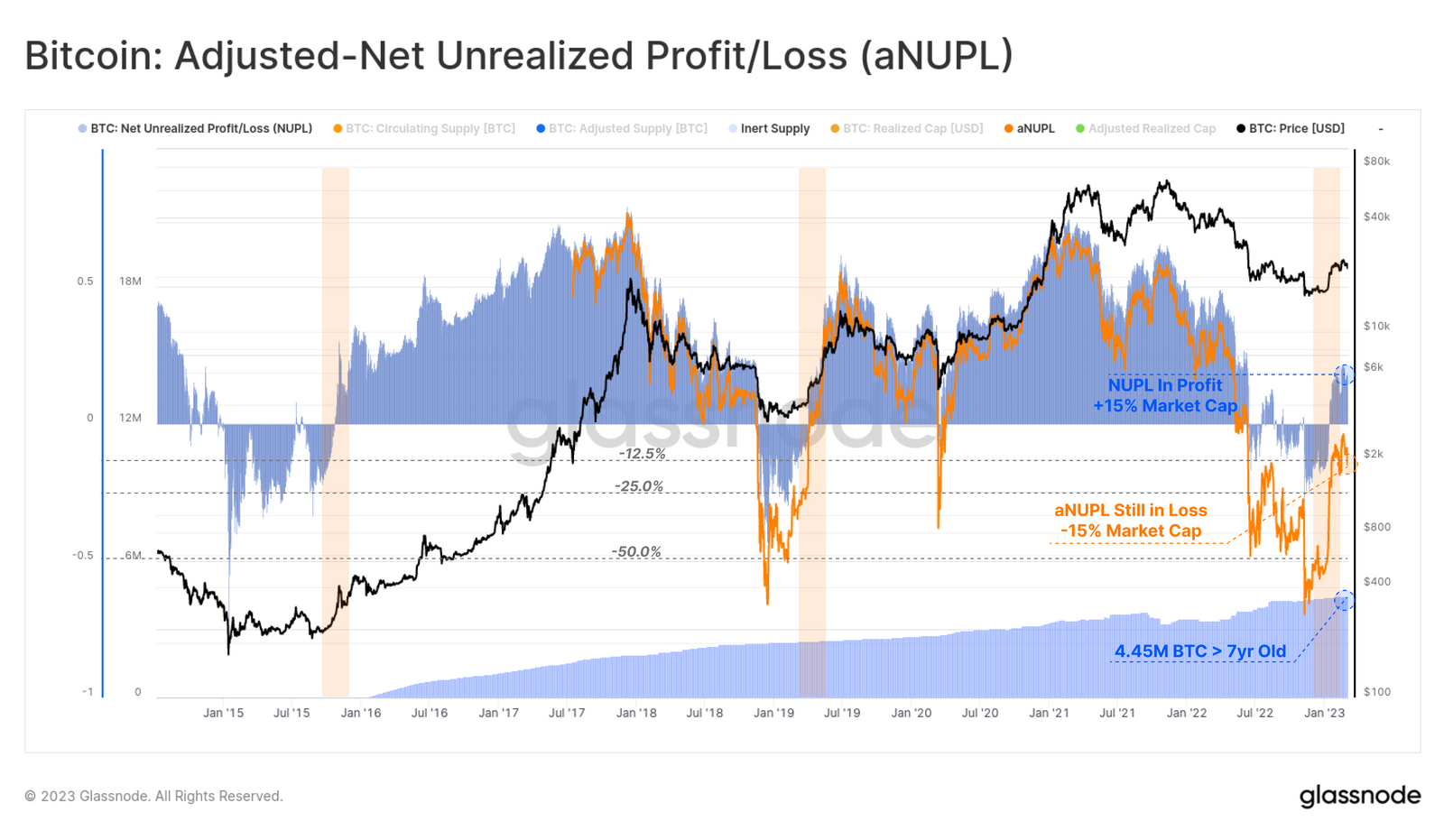
While some Bitcoin investors were realizing profit, positive on-chain signals appear when looking at the Net Unrealized Profit / Loss metric (NUPL). The NUPL metric shows the difference between unrealized Bitcoin profit and unrealized loss within the BTC supply.
According to Glassnode, NUPL metrics on March 6 show:
“Since mid-January, the weekly average of NUPL has shifted from a state of net unrealized loss to a positive condition. This indicates that the average Bitcoin holder is now holding a net unrealized profit of magnitude of approximately 15% of the market cap. This pattern resembles a market structure equivalent to transition phases in previous bear markets.”
While Bitcoin’s 2023 momentum may have taken a pause in mid-February and many headwinds remain, there are positive signs that the transition out of the deepest phase of bear market is near.
The views, thoughts and opinions expressed here are the authors’ alone and do not necessarily reflect or represent the views and opinions of Cointelegraph.
This article does not contain investment advice or recommendations. Every investment and trading move involves risk, and readers should conduct their own research when making a decision.


