Key takeaways:
-
Bitcoin’s move above $97,000 lacks confirmation in derivatives markets, with the options skew signaling caution toward any sustained rally.
-
Geopolitical risks, falling treasury yields, and weakening equities reinforce a risk-off setting that continues to limit Bitcoin’s upside.
Bitcoin (BTC) price surged to its highest levels in more than 60 days after posting a 5.5% gain on Wednesday. The move followed $840 million in inflows into spot Bitcoin exchange-traded funds (ETFs) on Monday and Tuesday. With Bitcoin finding footing on the upside, are further gains toward $105,000 likely in the near term?
Bitcoin’s rally toward $97,000 contrasts with the continued weakness of the tech-heavy Nasdaq Index, which has repeatedly failed to reclaim the 26,000 level last seen in early November 2025. Investor sentiment remains mixed, as Bitcoin still trades 23% below its $126,219 all-time high, while gold and silver prices reached record highs in 2026, signaling a stronger bid for traditional safe-haven assets.
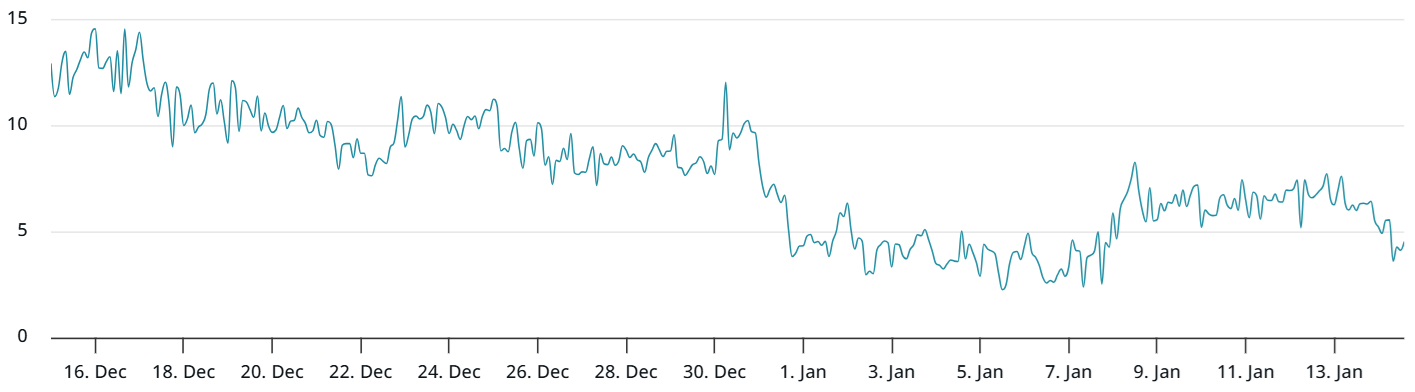
Professional traders have yet to turn bullish, according to the BTC options delta skew metric, as put (sell) options continue to trade at a premium. The BTC options delta skew currently stands at 4%, unchanged from one week earlier, indicating stable risk perception despite the rally above $96,000 on Wednesday. Traders remain skeptical about sustained gains above the $100,000 level.
Bitcoin’s upside capped by increased sociopolitical concerns
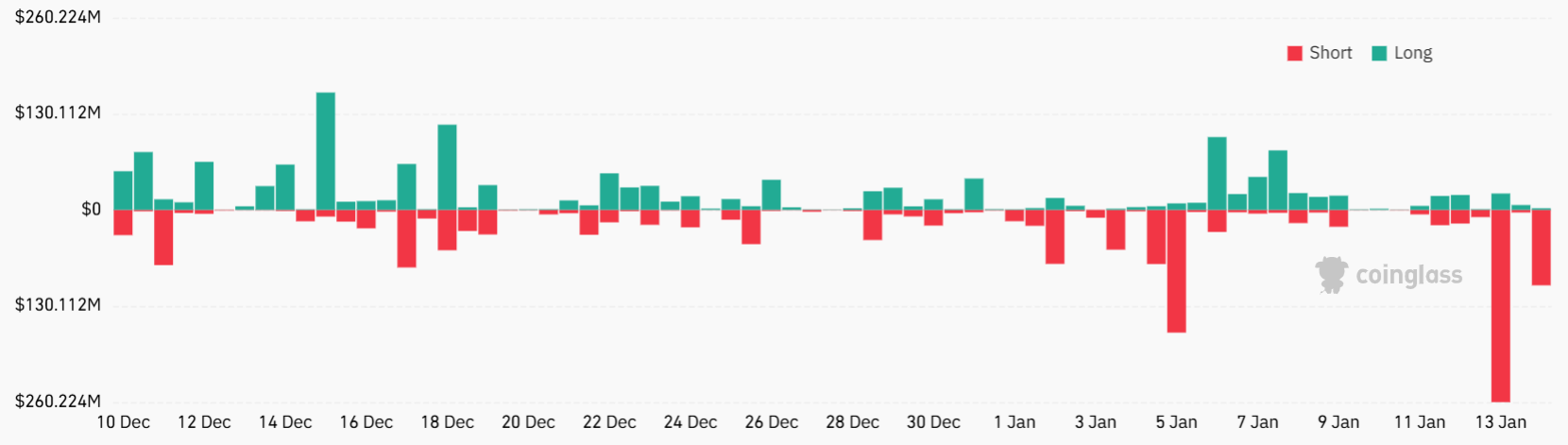
Typically, when whales and market makers grow optimistic, the skew turns negative, reflecting increased demand for neutral-to-bullish option strategies. Instead, Bitcoin bears were caught off guard, as the recent price advance triggered $370 million in liquidations of leveraged short (sell) positions over two days, the highest total since October 2025.
Part of the lack of optimism can be linked to geopolitical tensions after protests in Iran prompted military threats from US President Donald Trump, including a potential additional 25% import tariff on countries “doing business with the Islamic Republic of Iran.” Investors fear that US relations with China and India could deteriorate if the proposal moves forward.
Investor confidence has also been pressured by the Trump administration’s intention to gain control of Greenland. Trump has argued that the self-governing territory of Denmark is critical to US national security. German Defense Minister Boris Pistorius has reportedly offered assistance to Denmark in the event of a hostile takeover, according to Politico.
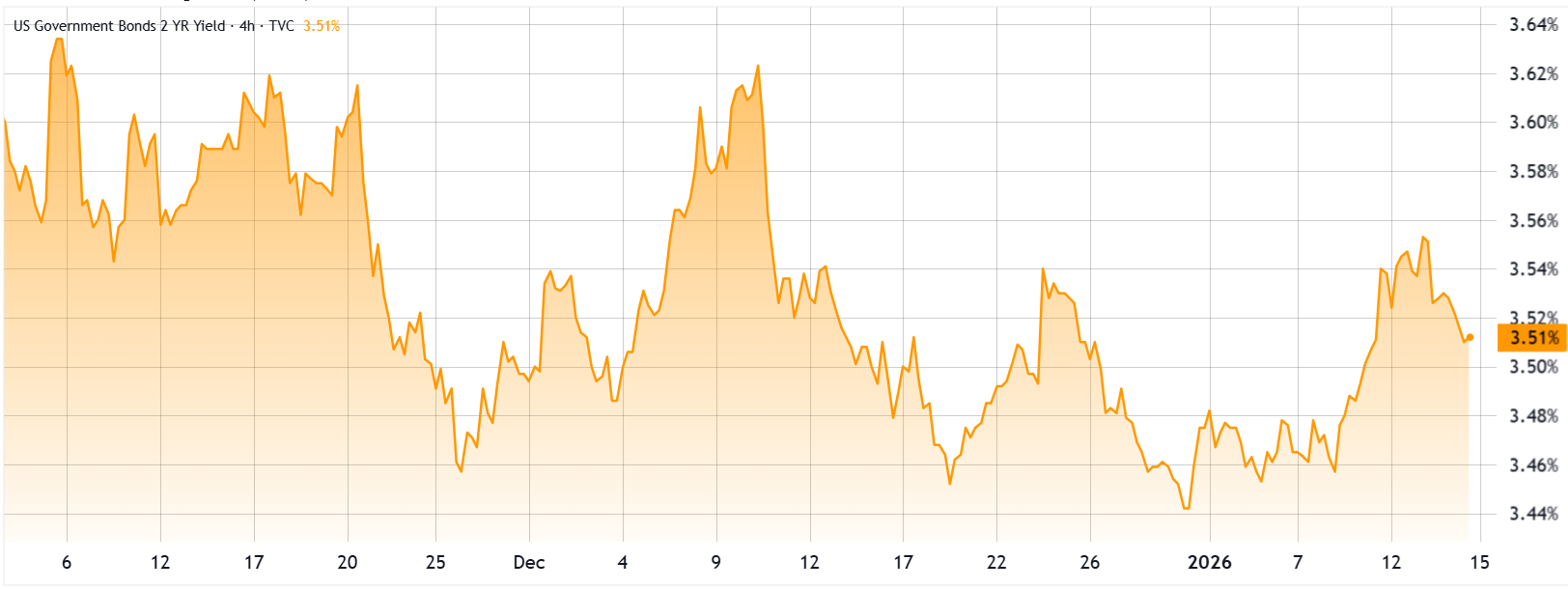
Yields on the US 2-year Treasury fell to 3.51% on Wednesday, indicating that traders are accepting lower returns in exchange for the safety of government-backed bonds. This is especially telling since the latest US consumer price inflation index (CPI) stood at 2.7% year over year, above the US Federal Reserve’s target.
Warren Buffett, CEO of Berkshire Hathaway, reportedly warned that the lack of clarity surrounding the future direction of artificial intelligence is concerning. Reflecting this caution, Berkshire’s cash position climbed to a record $381.7 billion, up from $170 billion one year prior.
The Nasdaq Index declined 1.6%, while Oracle (ORCL US) shares dropped 5% after bondholders filed a class action lawsuit alleging the company failed to disclose the need for significant additional debt to expand its artificial intelligence infrastructure.
Related: Bitcoin ETFs on rollercoaster as traditional funds pull in $46B in 2026
As uncertainty builds, traders have reduced equity exposure, signaling a lower tolerance for risk that also limits appetite for cryptocurrencies.
It remains unclear whether Bitcoin has decisively ended its two-month bear market, but derivatives data show traders remain highly skeptical of a rapid rally toward $105,000. For now, investors’ focus remains on the broader sociopolitical risks and on whether the US Federal Reserve can support economic growth without reigniting inflation.
This article does not contain investment advice or recommendations. Every investment and trading move involves risk, and readers should conduct their own research when making a decision. While we strive to provide accurate and timely information, Cointelegraph does not guarantee the accuracy, completeness, or reliability of any information in this article. This article may contain forward-looking statements that are subject to risks and uncertainties. Cointelegraph will not be liable for any loss or damage arising from your reliance on this information.