
Bitcoin (BTC) spent another day tackling $25,000 on Feb. 20 as analysts continued to warn over market manipulation.
Bitcoin buoyed by “Notorious B.I.D.”
Data from Cointelegraph Markets Pro and TradingView showed BTC/USD making up losses from around the weekly close to approach the $25,000 mark again at the time of writing.
Bulls remained unable to spark a resistance-support flip, however, and whale activity on exchanges kept suspicions high.
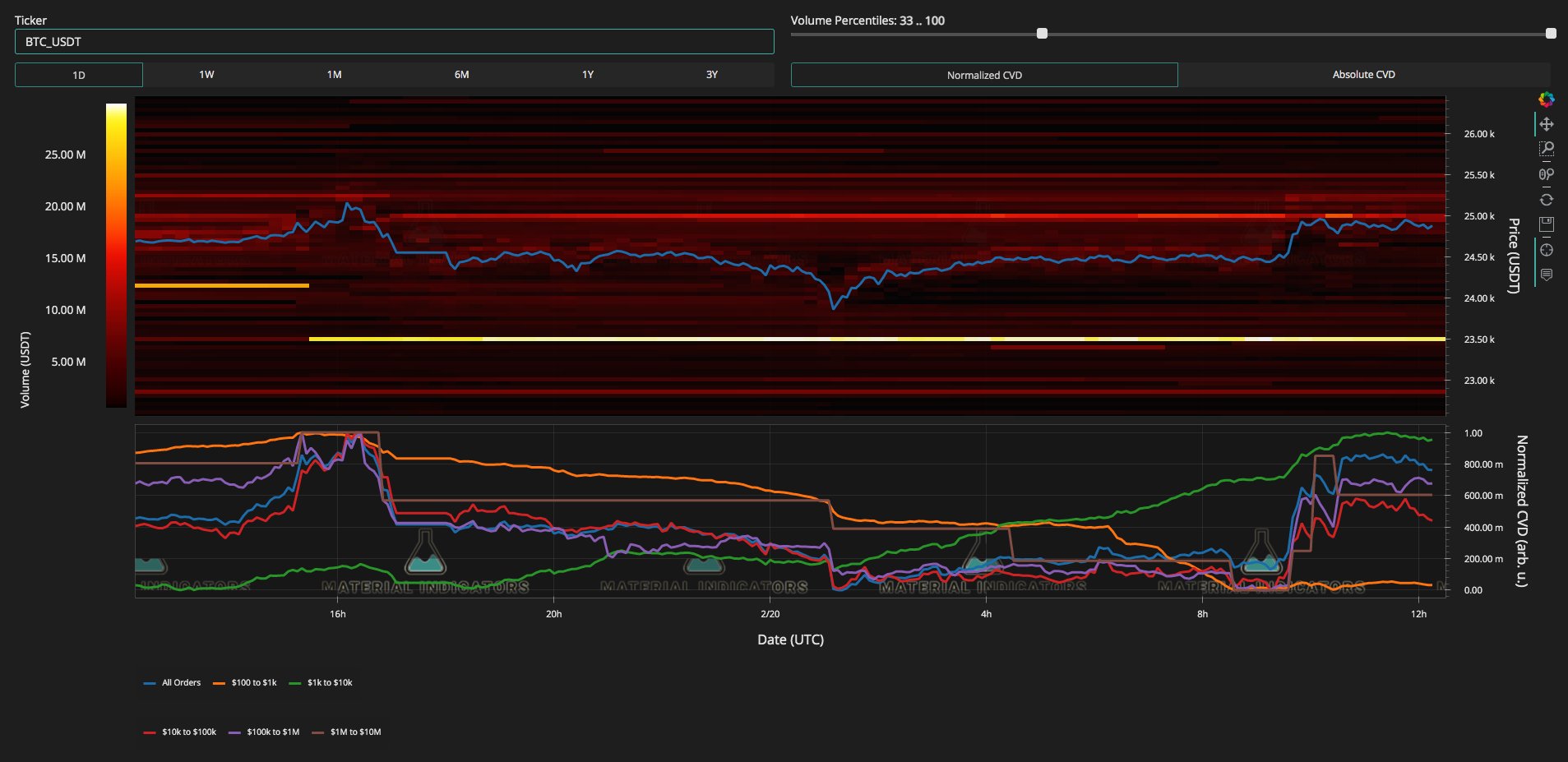
In its latest update, monitoring resource Material Indicators revealed that large-volume traders were artificially “thinning” resistance overhead, making it more likely that BTC/USD would move higher.
Co-founder Keith Alan referenced a wall of bid liquidity buoying spot price, something he called the “Notorious B.I.D.”
“Multiple rejections from $25k correlates perfectly with BTC macro TA which is a valid reason to TP at these levels, but Notorious B.I.D. is still trying to push price up,” a tweet stated.
“Based on the history, and the potential to rip through upside illiquidity, I’m still scalping longs.”
Material Indicators added that “From a TA perspective this should be a local top, but Notorious B.I.D. is still running the binance order book.”
“They are distributing BTC ask liquidity out of the $25k – $25.5k range into the active trading zone so resistance is thinning,” part of comments additionally read.
A potential plan among such traders could be to spark a large price run, causing retail investors to pile in or go long, then get stuck as whales distribute BTC to the market at higher levels.
China could boost “liquidity junkie” crypto
With United States markets closed for a holiday, meanwhile, one analyst turned to longer-term implications of moves from China.
Related: A ‘snap back’ to $20K? 5 things to know in Bitcoin this week
In addition to potentially allowing Hong Kong retail investors access to previously-banned crypto, the Chinese central bank injected a record $92 billion of liquidity into the economy on Feb. 17.
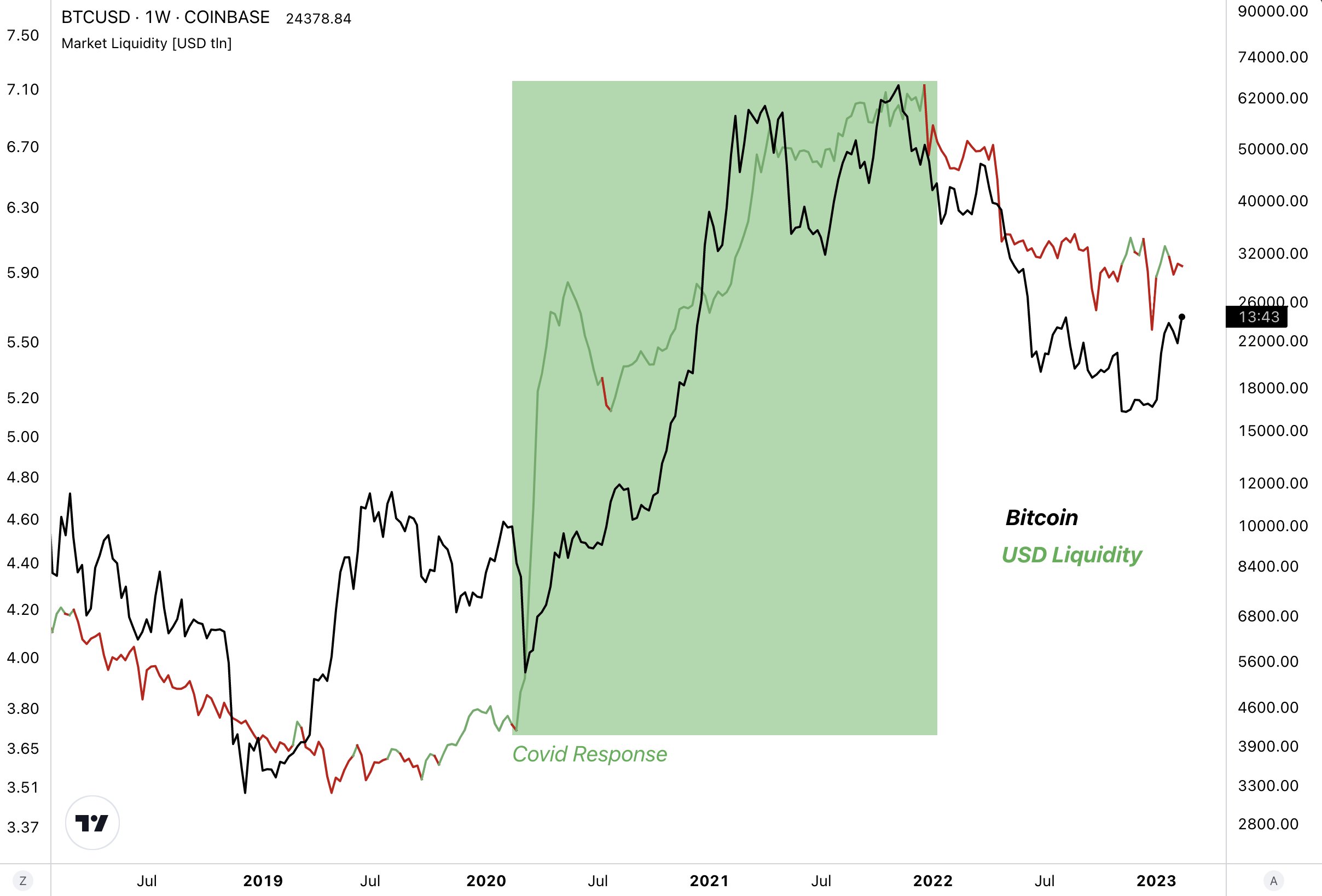
“While most analysts are focused on how the Fed tightening will reprice risk assets this cycle, they’re failing to consider the scale of easing in the east,” popular Twitter account Tedtalksmacro argued in a thread.
It explained that unlike in the U.S., where the Fed is withdrawing liquidity via quantitative tightening (QT), China is doing the opposite. In 2020 under the Fed’s COVID-19 quantitative easing (QE), risk assets including crypto saw an eighteen-month bull run.
“Crypto is not tied to any particular economy or entity, but rather is a liquidity junkie – it longs for the risk-hungry investor to get cash and bet on the fastest horse. That’s set to be exactly what will happen this year in China,” the thread continued.
As Cointelegraph reported, U.S. already liquidity forms a major talking point when it comes to cryptoasset performance, with Arthur Hayes, former CEO of derivatives giant BitMEX, predicting downside continuing in the second half of 2023.
“Of course, not all of the cash injected by the PBoC will end up in risk assets. But I’d bet that a decent portion of it will!” Tedtalksmacro nonetheless concluded.
“Just like we saw from the West in 2020, heightened liquidity from central banks = prices of risk assets (like BTC) go up.”
The views, thoughts and opinions expressed here are the authors’ alone and do not necessarily reflect or represent the views and opinions of Cointelegraph.


