
Bitcoin’s recovery to its all-time high may be threatened by rising recession fears, which could ease if the United States and China begin tariff negotiations this month, research analysts told Cointelegraph.
Appetite for global risk assets such as Bitcoin (BTC) may take another hit, with analysts from Apollo Global Management predicting a recession by the summer.
“Apollo predicting Summer Recession: Sharpest decline in earnings outlook since 2020,” cross-asset analyst Samantha LaDuc wrote in an April 26 X post.
The progress on the tariff negotiations may be the most significant factor impacting a potential recession and Bitcoin’s price trajectory, according to Aurelie Barthere, principal research analyst at crypto intelligence platform Nansen.
“May is seen as pivotal as Chinese shipments reach the US’s shores, and exemptions on some tariff categories such as auto parts and sub-USD-800 shipments from China/ Hong Kong expire,” Barthere told Cointelegraph, adding that a lack of negotiations in May could lead to an economic recession and “double-digit losses” for Bitcoin.
However, this is the least likely scenario, since neither China nor the US “ has an economic interest in the interruption of bilateral trade,” Barthere said, adding:
“Given this, the main tariff scenario is for the US reaching deals or at least ‘agreements in principle’ with its main trade partners, probably settling around the 10% reciprocal tariff ‘floor’.”
If that scenario plays out and trade tensions ease in May, Bitcoin is likely to revisit its all-time high, Barthere said.
The US has “proactively reached out to China through multiple channels,” for signaling its openness for tariff negotiations, Reuters reported on May 1, citing unnamed sources who spoke to state-affiliated Chinese media platform Yuyuan Tantian.
Related: Bitcoin treasury firms driving $200T hyperbitcoinization — Adam Back
Bitcoin may rally despite recession
While most analysts hope to see trade negotiations in May alleviate economic concerns, Bitcoin may see more upside even in the face of a potential recession.
“Initially, Bitcoin and cryptocurrencies may experience volatility, dropping alongside risk assets like stocks due to investor sell-offs,” Anndy Lian, author and intergovernmental blockchain adviser, told Cointelegraph, adding:
“Historical data, such as Bitcoin’s recovery post-2020 recession, suggests it could rebound, especially if seen as a hedge against inflation.”
“In stagflation (high inflation and slow growth), Bitcoin, often compared to gold, may perform well, attracting investors seeking value preservation. Yet, its increased correlation with the stock market, particularly tech stocks, introduces uncertainty,” said Lian, adding that crypto investors should continue monitoring economic policy shifts to gauge market direction.
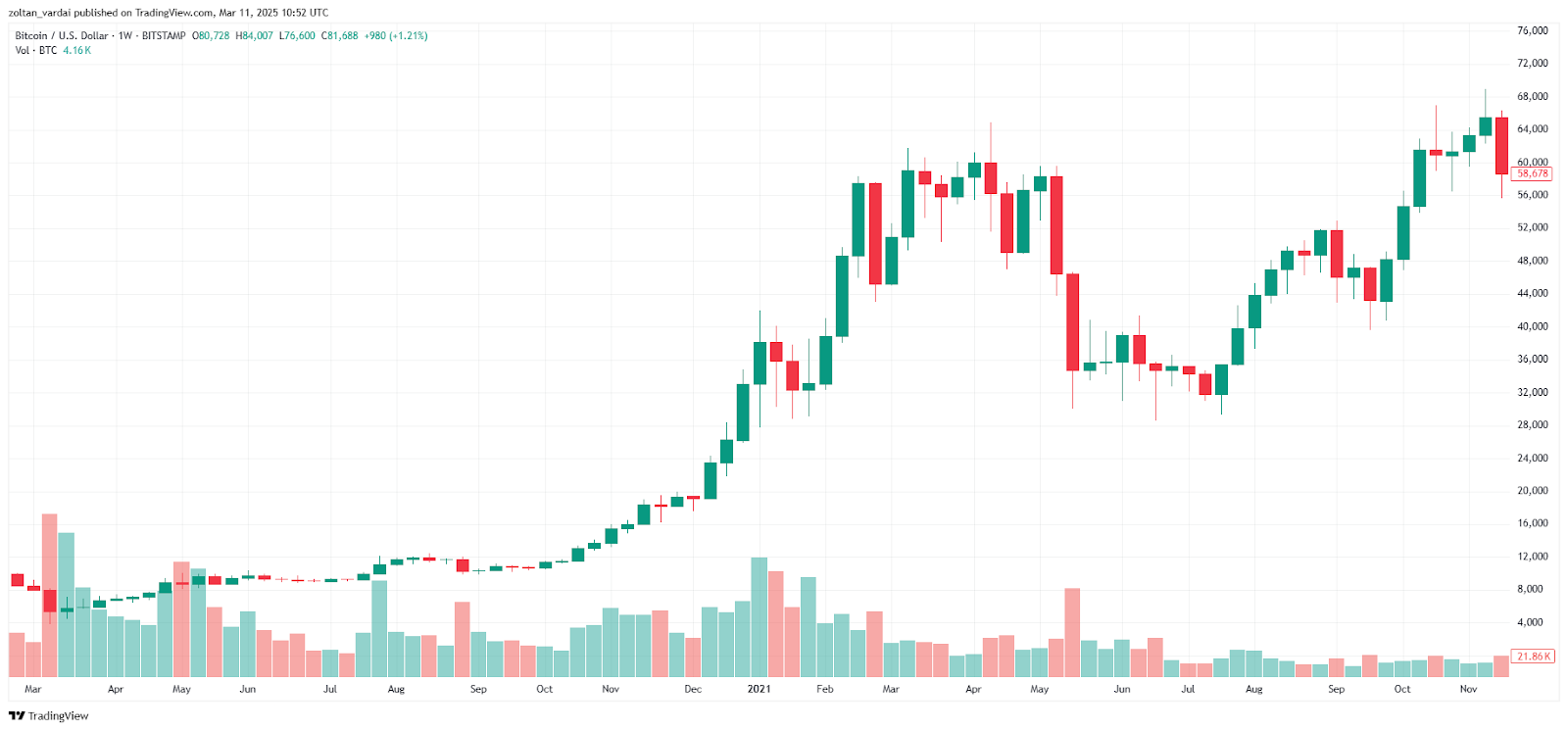
However, Bitcoin’s increasing correlation with tech stocks adds uncertainty to that outlook. Following the COVID-19 crash in March 2020, Bitcoin surged more than 1,050%, climbing from $6,000 to an all-time high of $69,000 in November 2021. That rally came after the Federal Reserve launched its $4 trillion asset purchase program in March 2020.
Related: Bitcoin to $1M by 2029 fueled by ETF and gov’t demand — Bitwise exec
Other industry watchers remain concerned by the crypto market’s response to economic stagnation.
“If the analysts are correct about the recession (which is certainly not guaranteed), crypto markets will likely decline alongside broader risk-on assets and equities,” according to Marcin Kazmierczak, co-founder and chief operating officer of blockchain oracle firm RedStone.
Kazmierczak said April’s “Liberation Day tariffs and trucking slowdown could create economic contagion that historically hits speculative assets hardest.”
“While crypto’s growing institutional adoption introduces some uncertainty, it’s not enough to overcome the fundamental risk-on classification that still dominates market behavior,” he added.
Magazine: Altcoin season to hit in Q2? Mantra’s plan to win trust: Hodler’s Digest, April 13 – 19


