
Bitcoin (BTC) traders holding 100–10,000 BTC realized losses at an average of $337 million per day in Q1 2026, the worst quarter since 2022, according to data from Glassnode.
Key takeaways:
-
Bitcoin dropped more than 20% after whales last realized losses at a comparable pace in 2022.
-
Long-term holders are also selling at a loss, indicating capitulation and potentially more downside in price.
BTC whales, sharks realized $30.91 billion loss in 2026
Realized Loss tracks the total dollar value of losses locked in when BTC is sold on-chain below its purchase price. In 2026, two significant wallet cohorts show signs of capitulation.
They are addresses holding 100–1,000 BTC, or “sharks” that often represent mid-sized funds or wealthy investors, and those holding 1,000–10,000 BTC, which are considered whale-sized entities.
In Q1, Bitcoin’s sharks (yellow) realized losses at an average of $188.5 million per day, while whales (orange) comprised another $147.5 million daily.
Combined, these large entities have locked in roughly $30.91 billion in realized losses so far in 2026.
Bitcoin’s realized losses in Q1 2026 for these high-net-worth entities rank among the most severe on record, trailing only Q2 2022’s roughly $396 million daily average.
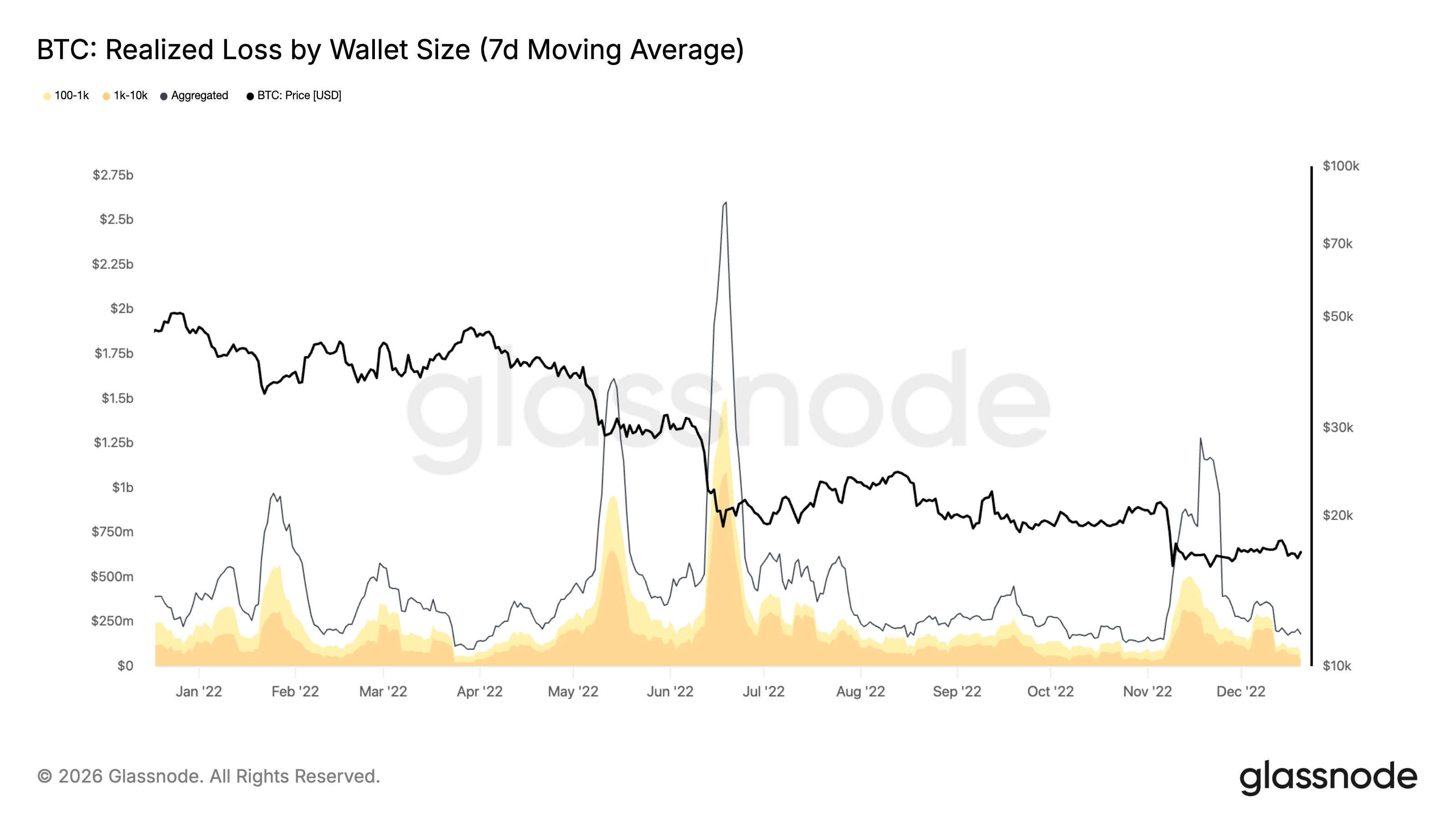
In Q2 2022, BTC’s price dropped by over 50% and another 20% by the year’s end. It kept falling as the Terra collapse, Celsius freeze, and Three Arrows failure triggered panic across crypto, draining liquidity and confidence.
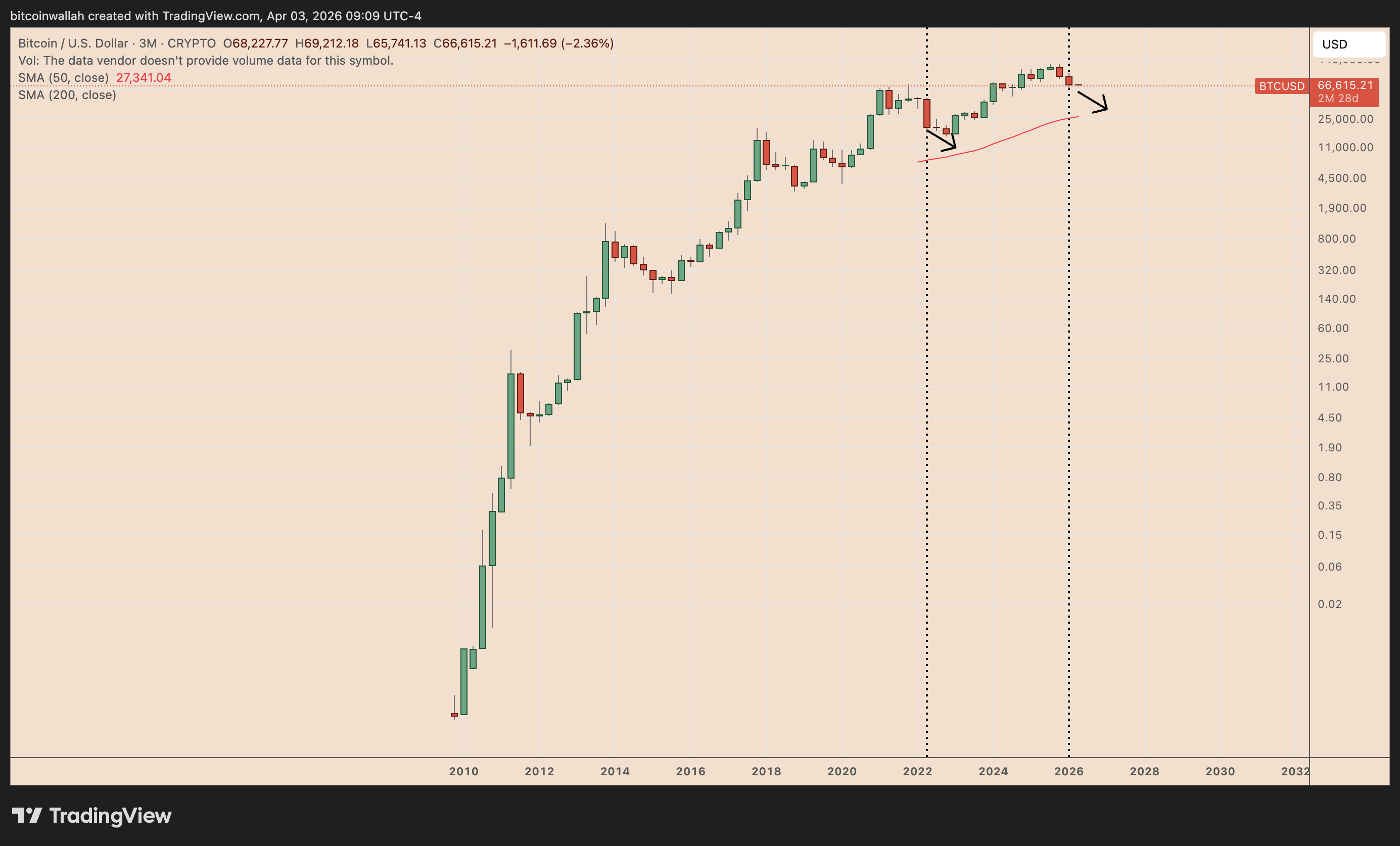
In 2026, pressure on Bitcoin has come from different sources, including Iran war-driven inflation fears, quantum-security risk, and broader stress in the AI-led risk trade.
Related: Bitcoin supply in profit heads to ‘true bear market’ levels
Therefore, whales and sharks are cutting their losses now because they expect the Bitcoin price to drop further as macro risks mount. This sentiment raises the odds of a 2022-like bear market, with a bottom in Q4 2026.
Bitcoin’s long-term holders add to downside risks
Another sign that Bitcoin’s sell-off may not be over comes from Glassnode’s Long-Term Holder Realized Loss chart, which tracks losses locked in by investors who held coins for more than six months before selling.
That figure remains elevated at around $200 million per day on a 30-day average basis since November 2025.
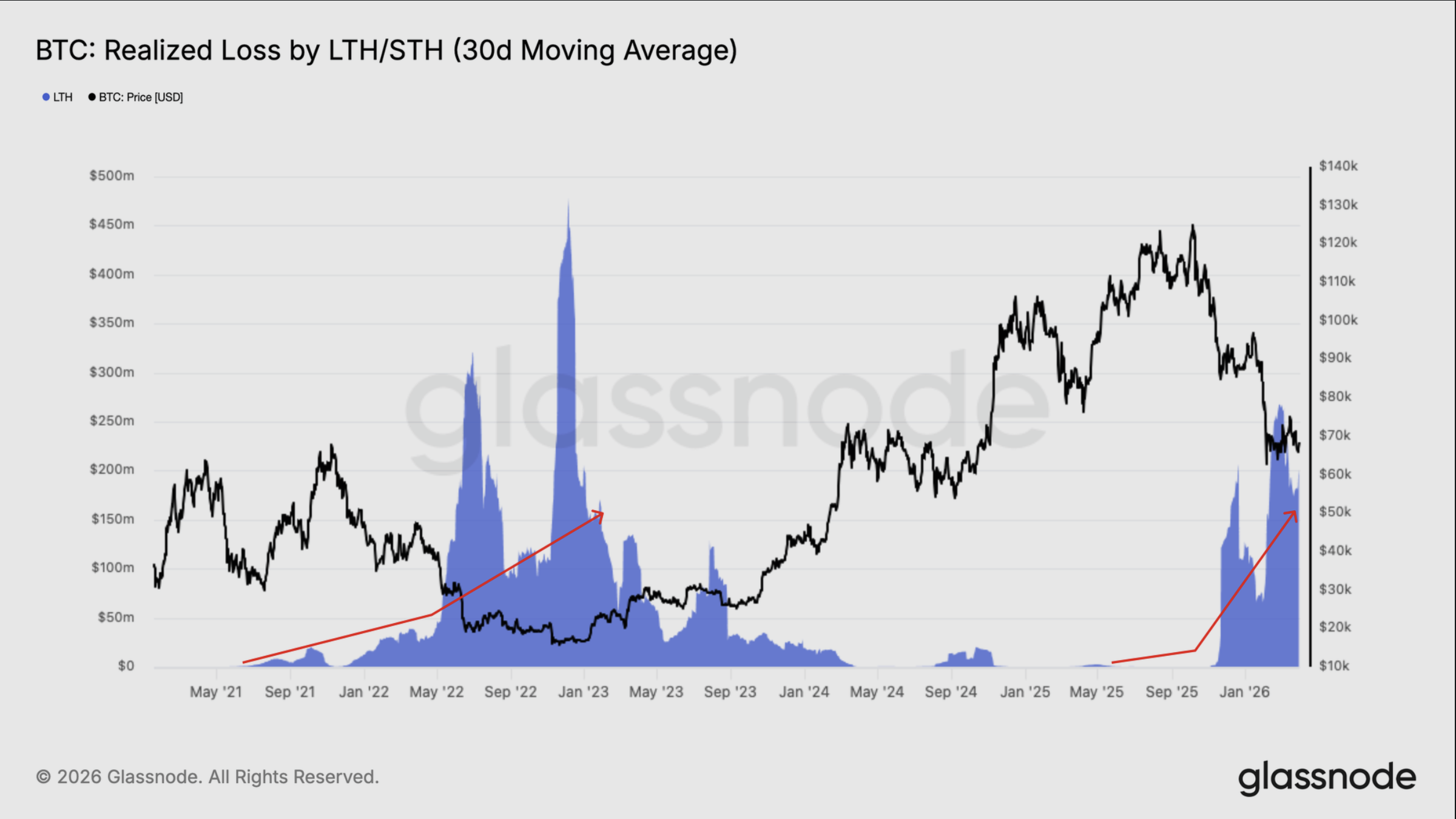
“A meaningful cooldown toward levels below $25M per day would represent a more compelling signal of exhaustion in selling pressure,” Glassnode analysts said in their weekly report published on Wednesday, adding:
“A prerequisite for the base formation that historically precedes a sustainable bull market transition.”
Together, these headwinds have already fueled calls for a deeper BTC correction, with some analysts pointing to the $40,000–$50,000 range as a possible bottom.
This article is produced in accordance with Cointelegraph’s Editorial Policy and is intended for informational purposes only. It does not constitute investment advice or recommendations. All investments and trades carry risk; readers are encouraged to conduct independent research before making any decisions. Cointelegraph makes no guarantees regarding the accuracy or completeness of the information presented, including forward-looking statements, and will not be liable for any loss or damage arising from reliance on this content.


