Crypto Traders Apparently Spam Truth Terminal into Pumping Coin Associated with Brian Armstrong’s Dog Source
Crypto Traders Apparently Spam Truth Terminal into Pumping Coin Associated with Brian Armstrong’s Dog

Crypto Traders Apparently Spam Truth Terminal into Pumping Coin Associated with Brian Armstrong’s Dog Source

In recent days, a flurry of mainstream media outlets and (often pro-Harris) social media posters have suggested, with varying degrees of certainty, that pro-Trump forces are manipulating Polymarket to make his chances look higher than they are. These claims cite heavy buying by Fredi9999, Theo4, and other Trump whales. Source
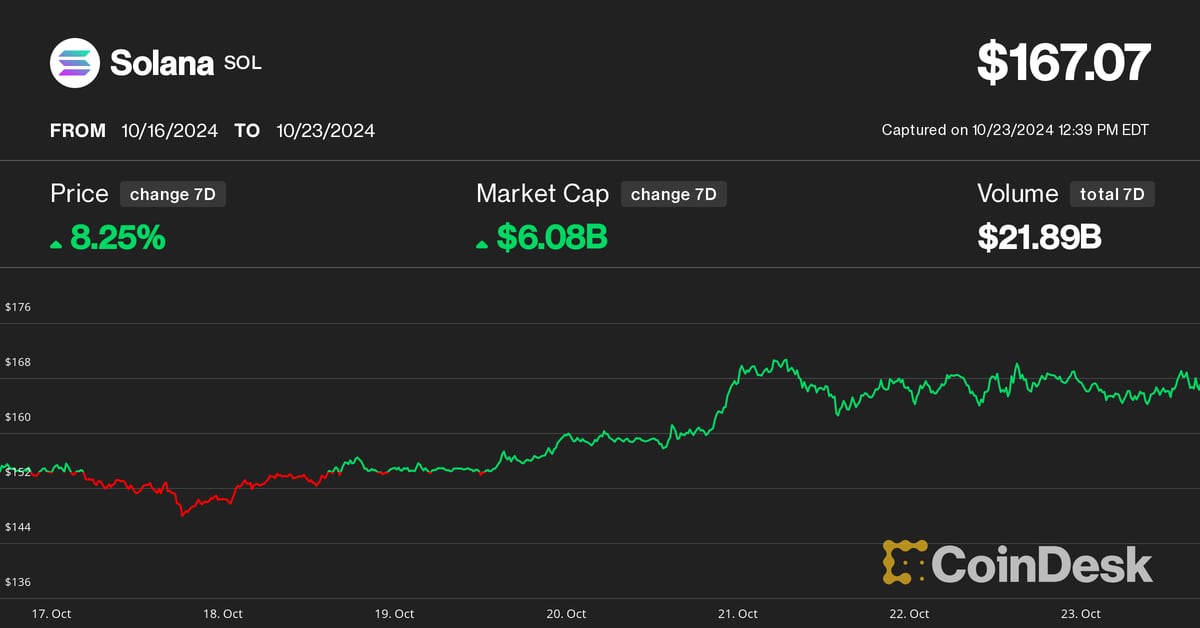
Solana was the best-performing asset in the CoinDesk 20 Index through the week, advancing 11%, while BTC and ETH declined. Source

This week’s issue could not be more chock-full of blockchain content. We clarify Tron founder Justin Sun’s role in the WBTC project, bring you excerpts from the new crypto book “Lessons Learned” and highlight inspirational women of Web3 and AI. PLUS a photo from the stage at Cosmoverse. Source

Variational, a protocol enabling leveraged peer-to-peer trading for customizable crypto derivatives, announced Wednesday it has secured $10.3 million in seed funding. The round was co-led by Bain Capital Crypto and Peak XV Partners (FKA Sequoia India) with support from Coinbase Ventures, Dragonfly Capital, North Island Ventures, HackVC, Brevan Howard, and many other VCs, angel investors, and industry leaders. Source
First, and perhaps foremost, the Fed would be conflicted. As an alternative payment service, stablecoins compete with the Fed’s own payment infrastructure, including FedNow, the central bank’s instant payment service. The Fed’s consideration of a central bank digital currency would leave it further conflicted when regulating privately issued stablecoins, as those two digital representations of the dollar can be seen as substitutes. Any government body, the Fed included, would struggle to objectively analyze private payment innovations that compete with its own services. Giving the Fed the authority to regulate stablecoins…

Crypto markets have shown explosive growth, far outpacing traditional asset classes in terms of returns. For example, bitcoin has delivered an annualized return of 230% over the past decade, compared to the S&P 500’s annualized return of around 11%. Ether, another dominant cryptocurrency, has also offered triple-digit annual growth rates in its early years. Even with their volatility, these digital assets provide investors with the potential for significantly higher returns, particularly during periods of market expansion. Source

The cryptocurrency and decentralized finance (DeFi) ecosystems currently lack access to stable, high-quality collateral besides stablecoin. Crypto and DeFi traders typically rely on volatile assets like bitcoin or ether as collateral for loans, staking, and liquidity pools. While effective, this system introduces significant risks, as the value of these assets can fluctuate wildly within short time frames, leading to over collateralization to mitigate risks. The alternative is to post stable coins that only earn a yield to the stablecoin issuers or selected market participants through opaque yield-sharing agreements. Source
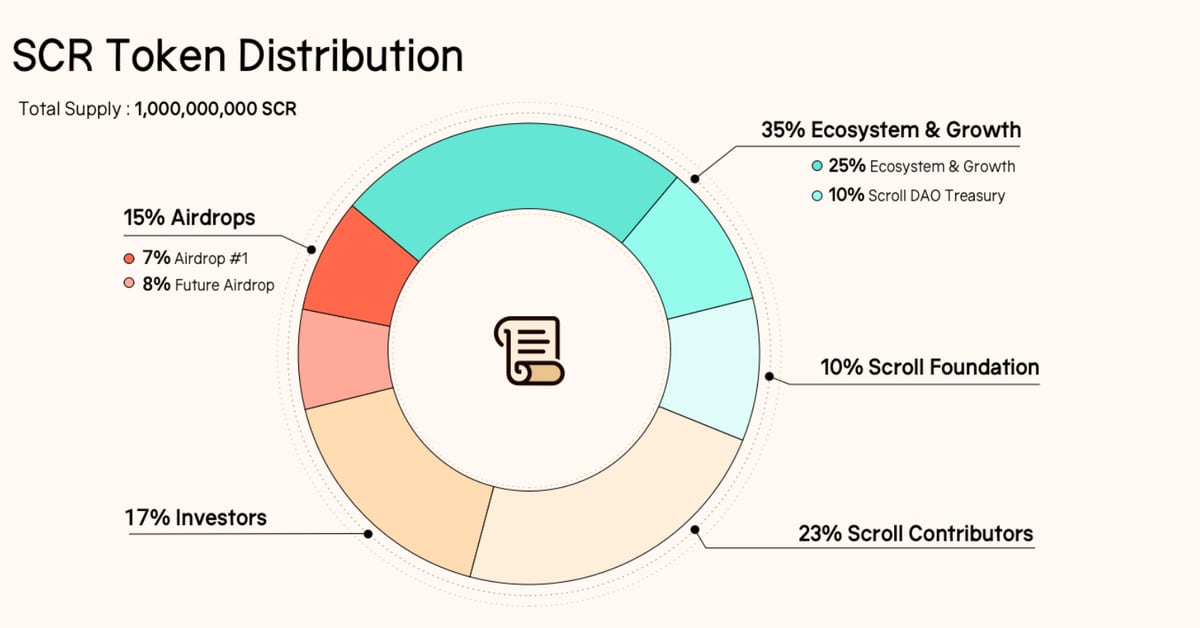
After more than a year of hype and expectation, layer-2 network Scroll’s governance token launch is beginning to fall short of expectations after being plagued by token allocation issues. Source

Another example: Whether you’re mining bitcoin or running an AI cluster, machines must be cooled to avoid overheating – but the optimal cooling method will depend on the application, Cann said. Most bitcoin rigs are cooled by fans or by being submerged in a pool of dielectric fluid, which comes at little cost. The GPUs used for AI, on the other hand, require some form of air conditioning, or to pass fluid over the machine’s silicon chip – two methods that consume large amounts of energy. Other differences emerge when…