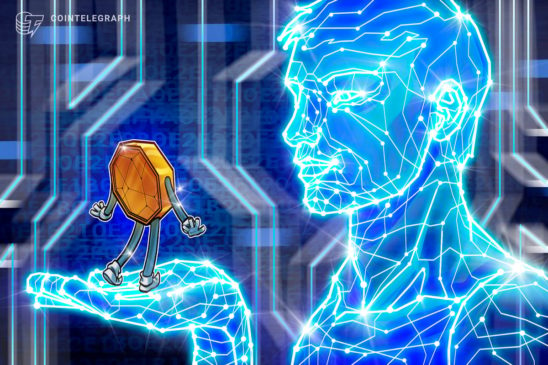
It’s no secret that bear markets are challenging. A quick scan of top projects of any past market cycle will unveil how many once-promising projects have faded into oblivion. While these cycles are often discouraging, many fail to realize that with every market downturn comes the opportunity for innovation toward a stronger future for Web3. Just look at Uniswap and OpenSea’s success to see how real the potential is for “building in a bear market” to spark new bullish cycles.
So, as we navigate the market climate, which is showing glimmers of hope for an upward trajectory, what innovations do we see on the horizon? At the top of the list sits artificial intelligence (AI) and its potential to take Web3 into its most valuable and exciting period of change, a new era that will unlock a goal we’ve been chasing since day dot: onboarding 1 billion users.
In what feels like an overnight period, AI has undoubtedly become the most exciting technological innovation since, well, blockchain technology. It feels natural that these two next-generation industries will unify to power the future of humanity. The proliferation of AI applications, the next iteration of Web2’s (controversial) success in improving and reimagining our digital existence through algorithmic curation and targeting, also presents an opportunity to step back and ask ourselves what Web3 really needs to hit mass adoption. Near the top of the list, many would agree, is to simplify and strengthen many blockchain use cases so that average users can easily participate.
Why are apps like Spotify, Amazon and Instagram so good at delivering the content we didn’t even know we needed? While it’s no secret these companies mine our data and invade our privacy to train algorithms to know us better than we often know ourselves, these products onboarded — and yes, changed — the world through simple and effective UX.
Related: Cryptocurrency miners are leading the next stage of AI
While many have rightfully identified vast risks in AI, from potential regulatory issues to its speed of adoption, the technology has (ideally 100% unbiased) potential to personalize the onboarding process and utility of applications to create a more supportive and effective ecosystem of decentralized applications in Web3, which infamously consists of clunky, intimidating and somewhat “cold” UX for average users. Thus, the opportunity to create smarter, more attractive applications led by frictionless UX is paramount.
AI apps like ChatGPT-4 are already making their way into classrooms, so why shouldn’t this technology help users get better at engaging with Web3 apps, from onboarding to becoming a power user?
Let’s take nonfungible tokens (NFTs), for example. AI can scrub a user’s wallet history to understand their buying patterns to recommend digital assets they might want, much like Amazon does for its endless abyss of products. AI excels at pattern prediction and recommendation — in other words, personalization. Additionally, AI can examine on-chain patterns and market activity to find the best time to buy an NFT.
Regarding much-needed improvements to security and accountability in crypto, AI can also examine on-chain data of wallets and determine their reputation to help distinguish between safe and unsafe transactions; it can also require users to complete extra verification steps before completing transactions, which could reduce rampant phishing and hacks. Exchanges already do something like this, but AI can automate the process and ensure a user’s custody is preserved. Take this further, and we can define protocol ratings based on the attack vector they might be exposed to, helping developers catch potential issues before they happen.
For many normal users, terms such as “smart contracts,” “seed phrases” and “wallets” are intimidating terms. Imagine an outsourced AI chatbot, similar to the customer service assistance utilized by many websites, that can help understand our Web3 knowledge and user history (via our wallets) to help us complete actions — and understand them. This has the potential to drive new user engagement and the reengagement of existing Web3 users, leading to further adoption via improved education; it’s also easy to implement among all wallets.
Related: Artists face a choice with AI: Adapt or become obsolete
Moving to decentralized applications, AI can also significantly increase user engagement and adoption rate by analyzing the user’s on-chain data and recommending the best features and how to leverage them. AI can help users become the best possible traders, a virtual investment adviser with the most innovative tools.
And for developers, AI can even simplify their workflow by pre-auditing contracts, one of the biggest pain points for Web3 developers due to the amount of planning, time and cost it takes to audit smart contracts. Using AI as a pre-audit tool (and writing assistant) for smart contracts will enable a more streamlined operation for developers, saving valuable time and costs with the benefit of optimizations rolled into their product.
It all sounds pretty exciting. Whether you’re a developer looking to cut costs and time or a user looking to reduce what can be hours, days or years of learning necessary to understand the ins and outs of Web3, AI can remove the friction that’s amidst the greatest barrier of innovation and usability for our industry. Like Web3 overall, AI can be an additional layer to the ever-powerful toolkit that is revolutionizing how we create, chat, trade and live. Let’s use it as best we can as we build the future.
Harsh Rajat is the founder and project lead of Push Protocol (formerly EPNS). He has more than 12 years of entrepreneurial experience in various spectrums of tech, including system architecture, development and design in different tech fields (including mobile, web services, SaaS and blockchain). He previously founded 3 Magic Shots and Digital Poke.
This article is for general information purposes and is not intended to be and should not be taken as legal or investment advice. The views, thoughts and opinions expressed here are the author’s alone and do not necessarily reflect or represent the views and opinions of Cointelegraph.


