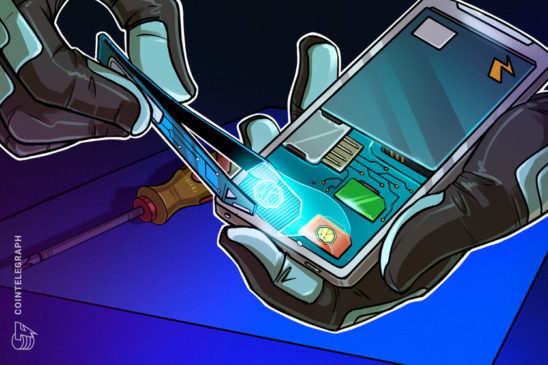
According to a Feb. 15 announcement, Conflux Network, also known as Shanghai Tree-Graph Blockchain Research Institute, said that it secured a partnership with China Telecom to develop a blockchain SIM (BSIM) card. As told by Conflux, the BSIM will have a secure place to store digital private keys and will be to call upon the said signature to transfer money to other users. In addition, ‘one-click direct check’ functionality will allow users to check for transaction information and status progress in real-time.
“The R&D phase for the BSIM card is complete – and it’s connected to Conflux’s main network in testing! This prototype has storage & sending functions for digital assets.”
Conflux also claims that the new BSIM card is able to store nonfungible tokens or NFTs, with support for transfer and exchange functionality. The firm also explains that with technology from China Telecom, the BSIM can have upwards of “10-20 Times Storage Space” compared to regular SIM cards, allowing for optimized access to decentralized applications and digital communities.
Currently, China Telecom is the country’s second-largest telecommunications provider, with over 390 million users. The first pilot program for the BSIM is scheduled to launch in Hong Kong later this year.
Conflux is a layer-one blockchain operating on a hybrid proof-of-work and proof-of-stake consensus. It is dubbed the “only regulatory-compliant public blockchain in China,” with the firm claiming its technology has been used in collaboration with brands such as McDonald’s China and Oreo. Its parent, the Shanghai Tree-Graph Blockchain Research Institute, is supported by the Shanghai Municipal People’s Government.
China Telecom, 2nd largest wireless carrier in China (390+ million mobile subscribers), has partnered with Conflux to develop Blockchain-enabled SIM cards – BSIM! pic.twitter.com/LQxz34L432
— Conflux Network Official (@Conflux_Network) February 15, 2023