
Crypto exchanges are setting up shop in Europe and securing licenses with EU officials, bringing more competition to the regulated European market.
So far this year, OKX, Coinbase, Bybit and Crypto.com have all secured licenses under the EU’s Markets in Crypto-Assets (MiCA) regulation. While it imposes strict requirements on various services in the crypto industry, it now means that crypto exchanges in the European Economic Area (EEA) will all be playing by the same rules.
Observers anticipate that this will see Europe pull ahead of other jurisdictions like the United States, which is still in the process of developing a rudimentary framework for stablecoins. Indeed, European regulators are already discussing a second regulatory package, “MiCA 2.0,” that would fill gaps not addressed in its first iteration.
MiCA may provide decent ground rules, but challenges remain for exchanges, including new entrants jockeying for territory.
Why crypto exchanges are moving to Europe
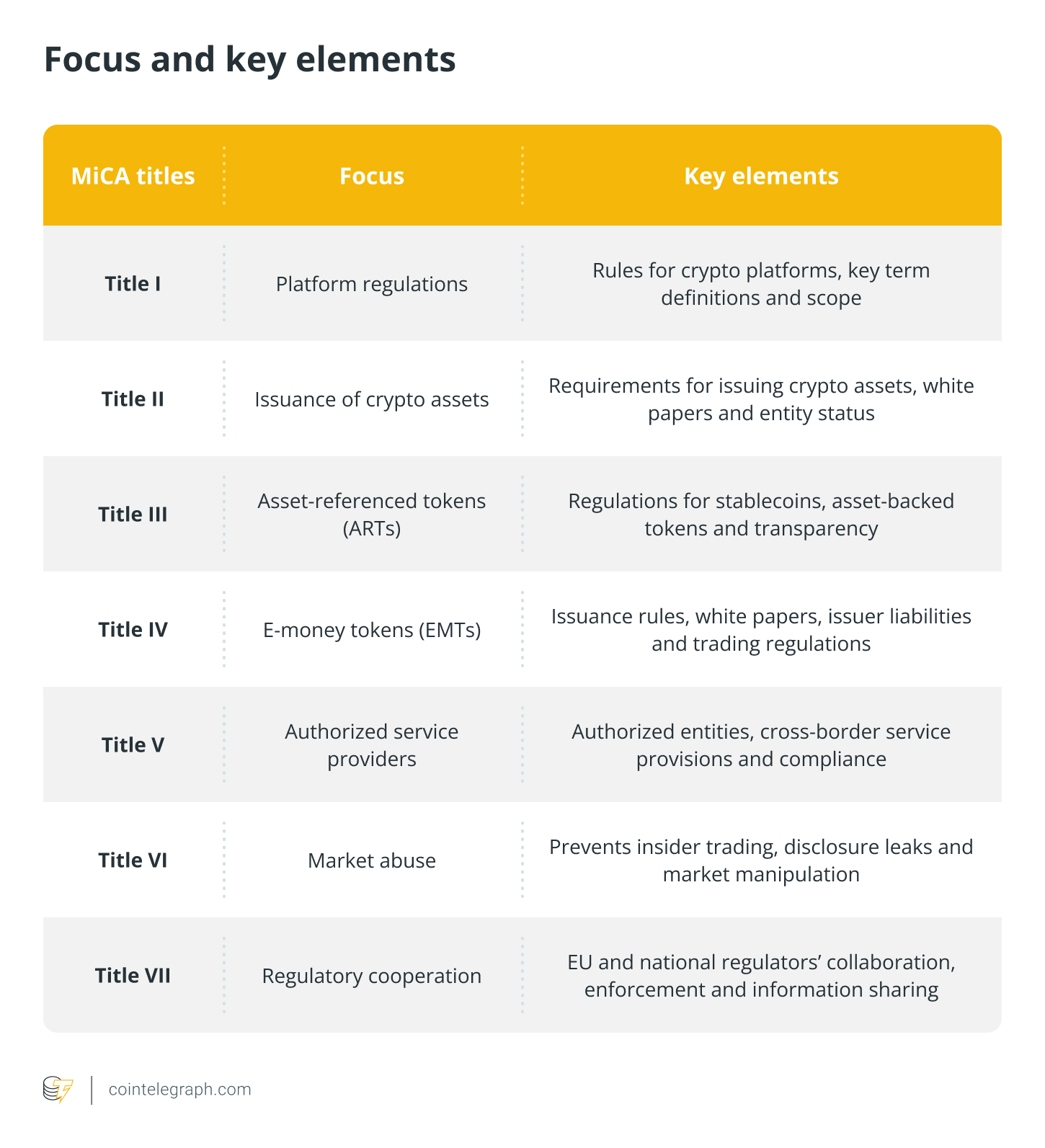
The MiCA package was an exhaustive regulatory effort from the EU that took four years from its inception until it came into force. Its seven titles contain laws and rules for platform regulations, token issuance, market abuse and more.
As bureaucrats in Brussels amended and deliberated on the regulatory package, some in the crypto industry debated the merits of MiCA, with some alleging it could lead to increased surveillance and less monetary freedom.
Compliance may mean more red tape for users and exchanges alike, but executives have highlighted MiCA’s ability to foster stability, and that could bring serious benefits for exchanges based in Europe.
OKX Europe CEO Erald Ghoos told Cointelegraph that moving into Europe gives the exchange “a clear regulatory framework (MiCA) that offers legal clarity and fosters long-term planning.”
MiCA licensure also comes with a “pan-European passport.” While exchanges must choose a specific jurisdiction in which to apply, once they get certified, they can serve customers across the 30 countries in the EEA.
Ghoos stated that the high consumer standards, which are now on par with those expected in the traditional finance sector, mean “access to institutional clients […] for derivatives and portfolio management” as well as “euro-based pairs, access to local payment rails and regional support.”
Konstantins Vasilenko, co-founder and chief business development officer of Paybis, previously told Cointelegraph that trading volumes from EU customers increased 70% quarter-on-quarter in Q1 2025 after MiCA came into force. He said this was likely due to increased institutional involvement.
Lukas Enzersdorfer-Konrad, deputy CEO of Bitpanda, told Cointelegraph, “It’s still early, and there are several other factors impacting markets at the moment, but we believe MiCA is already having a positive effect.”
Challenges for compliance and possible consolidations
Setting up in the EU doesn’t come without its challenges.
A spokesperson for Bybit told Cointelegraph, “Unlike in other regions, operating in Europe under [MiCA] demands strict controls around investor protection, capital requirements, operational transparency and Anti-Money Laundering compliance.”
These requirements mean significant structural changes to the exchange’s operations and are challenging to manage “without compromising user experience,” the spokesperson said.
For OKX, the diversity of European clientele is the main challenge. Ghoos said entering the EU meant “balancing localization (language, customer service, financial standards) with maintaining global infrastructure and scalability.”
OKX wants localized products “for each and every market, so it will take time to ensure this is being done properly.”
Some executives expect a change in the European crypto landscape. The Bybit spokesperson said that MiCA will result in consolidation, “separating serious market players from unlicensed actors and driving healthy, trust-based competition.”
Smaller exchanges may “struggle with the cost and complexity of meeting MiCA standards,” per Ghoos. A consolidation would “favor larger, tech-advanced exchanges […] that can leverage scale, resources and regulatory preparedness.”
These large exchanges include OKX as well as Coinbase and Crypto.com, all of which are now MiCA certified. Coinbase and Crypto.com did not immediately respond to Cointelegraph’s request for comment.
Some welcome the shakeup. According to Bitpanda’s Enzersdorfer-Konrad, many platforms have operated in Europe “for years” without meeting the same regulations that his Europe-native exchange “has adhered to from day one.”
With major exchanges moving in and under MiCA, “they are being held to the same standards — and that’s a necessary shift.”
Europe has low crypto adoption
More and larger exchanges are moving into Europe, which, on the whole, boasts a far lower score for crypto adoption than other parts of the world. Compared to other countries, EU members generally have regulated e-payment options and relatively stable currencies.
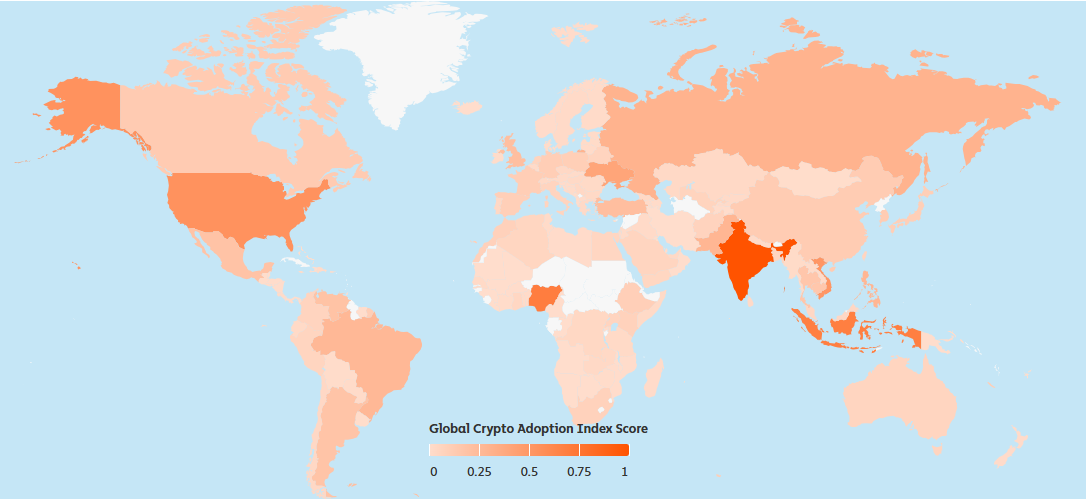
With MiCA bringing more crypto business onto the continent, how will more exchanges get their piece of a very slowly growing pie?
Enzersdorfer-Konrad said that Europe’s adoption rate is focused on “trust and regulation over speed,” emphasizing long-term growth. He said that with clear regulations now in full effect, “We believe demand and confidence will continue to increase.”
This increased trust may have knock-on effects for exchanges in the form of increased crypto adoption in the EU. If institutions see crypto as a safer form of investment with traditional safeguards, they may be more willing to jump in. Enzersdorfer-Konrad said:
“Clear rules increase trust, and trust drives adoption. Over time, this will unlock broader retail participation and allow institutions to move with confidence.”
The European market may be set for expansion amid increased institutional involvement, but large new entrants like OKX and Coinbase and a consolidation of smaller players could signal a turf war for Europe.


