
Euro-denominated trading accounts for only a small share of Binance’s activity, as the exchange faces uncertainty over its European licensing prospects under the Markets in Crypto-Assets Regulation (MiCA).
Euro (EUR) trading accounts for around 1% of Binance’s spot volume, CryptoQuant analyst Maartunn told Cointelegraph.
“Binance’s inflows remain globally distributed, which may limit the impact of potential MiCA-related setbacks,” Maartunn said, pointing to the exchange’s diversified user base across regions.
Source: CryptoQuant
The data comes as Greek regulators are reportedly preparing to reject Binance’s licensing application ahead of MiCA’s transitional deadline on July 1, a move that could complicate the exchange’s ability to serve EU residents.
Binance ranks among Europe’s biggest crypto exchanges
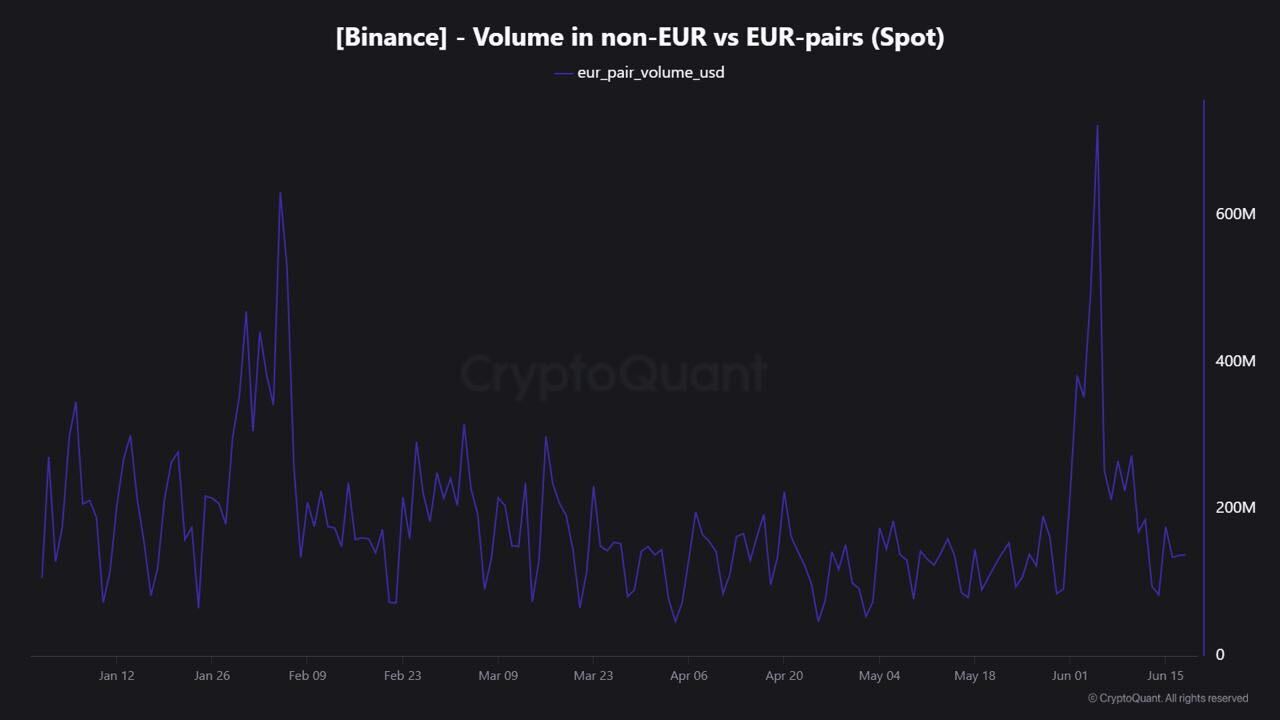
Even though EUR trading represents only about 1% of Binance’s global spot volume, the exchange still processes hundreds of millions of dollars in euro-denominated trades.
According to CryptoQuant data, Binance’s daily EUR-pair volumes have ranged from roughly $100 million to $250 million in 2026, with occasional spikes above $600 million.
Source: CryptoQuant
According to a December 2024 report by Kaiko, Binance, alongside Bitvavo, Kraken and Coinbase, accounted for more than 85% of all euro-denominated crypto trading volume.
Related: WhiteBIT secures MiCA license in Austria ahead of July 1 EU deadline
Unlike Binance, Bitvavo, Kraken and Coinbase are among the major exchanges that have already secured MiCA authorization, allowing them to offer services across the EU under the framework’s passporting regime.
83% of CASPs have yet to receive a MiCA license
Binance’s licensing uncertainty comes as many crypto asset service providers (CASPs) are still adapting to MiCA’s requirements.
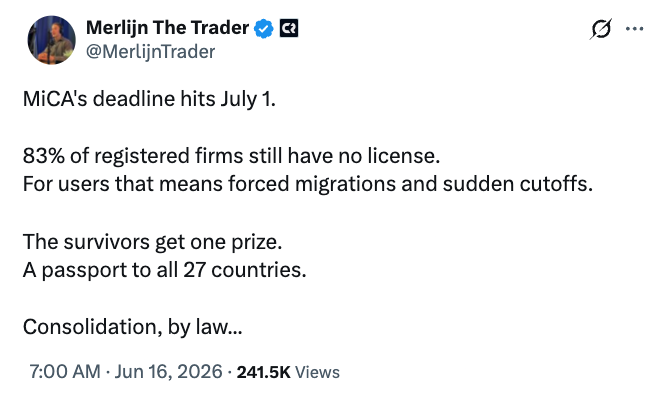
According to estimates based on European Securities and Markets Authority (ESMA) data cited by market analyst Merlijn Geurds, only around 210 of more than 1,200 firms operating under pre-MiCA registration regimes have obtained full authorization under the new framework.
Source: Merlijn Geurds
Geurds told Cointelegraph the gap reflects the cost and complexity of compliance, which requires governance standards, compliance controls and operational safeguards that many smaller firms lack.
“The result is consolidation by design,” Geurds said, adding: “A smaller group of well-capitalized, licensed players gets a passport to all 27 states, while a long tail faces forced migrations or cutoffs.”
Cointelegraph contacted Binance for comment on the size of its European business and the potential impact of MiCA-related restrictions but had not received a response by publication.
Magazine: SBF will never get a pardon, Trump peace deal boosts Bitcoin: Hodlers Digest June 14-21


