There’s wide agreement that Singapore is among the top crypto hubs in the world. The island city-state overtook the US to lead the world for adoption in Bybit’s World Crypto Rankings, solidifying the number one spot it was awarded in the Henley Crypto Adoption Index last year.
Anyone who’s attended the annual Token2049 event at the futuristic looking Marina Bay Sands won’t be surprised given Singapore’s regulatory clarity, institutional maturity and user engagement.
The seeds of its success were actually sewn in the 1980s when the fast developing nation embraced computerization with its IT2000 plan to become an “intelligent island.” When cryptocurrency began to become popular in the 2010s, the Monetary Authority of Singapore took a more open-minded approach than others and developed 2019’s Payment Services Act.
It helped attract crypto companies and capital inflows from across Asia, including Binance and Crypto.com. One of the standout successes is the homegrown institutional crypto platform Matrixport, founded by the people behind Bitmain.
It’s not an unqualified choice for number 1. Only around 11% of the fintech-savvy population owning crypto (other surveys put the figure higher), and physical merchant adoption is relatively low at 32nd in the world. However that may change in 2026 with Singapore’s Triple A and HitPay teaming up to enable 20,000 businesses to accept stablecoin payments.
Probably at least partly related to the fallout from the collapse of Terra-Luna, given Terraform Labs was run out of Singapore, the MAS launched a crackdown in 2025 on unlicensed entities offering crypto services to overseas clients. Bitget, Tokenize and Bybit itself had to scale back operations or leave the country. The crackdown was part of a broader effort to close regulatory loopholes and align with international standards.
But it’s still widely seen as striking a firm but fair balance.
“Singapore has achieved what no other crypto hub has: institutional trust at scale. This isn’t just about being crypto-friendly, it’s about building a credible, predictable environment where global institutions feel safe to innovate and invest,” Sky Wee, managing partner at Sky Ventures told Magazine.
Like most popular crypto hubs, Singapore doesn’t impose tax on personal crypto gains, though profits from crypto trading businesses may be taxed as income.
The Asia Pacific Region performed strongly in the rankings with Vietnam at number 9, Hong Kong (10), Australia (11), Philippines(17) and South Korea (20).
Singapore’s Henley Crypto Adoption Index ranking: #1, score 48.5/60.
World Crypto Rankings: #1.
Portugal – Popular global crypto hub for digital nomads
One of Cointelegraph Magazine’s most popular stories in 2025 was a guide to moving to Portugal as a crypto digital nomad.
The small country of 10.7 million people may not be a technology center like Silicon Valley or Singapore, but crypto people from across the globe are attracted by its digital nomad visa, tax breaks for highly skilled immigrants, and of course the great weather, beaches and food.
Catrina Wang, general partner at Portal Ventures, fell in love with Portugal after missing a flight home from a conference in 2022 and bought a home there the following year.
“I just really think it’s the best of multiple worlds when it comes to tax, lifestyle, value, and then it’s just a bit of balance to your crypto life,” she told Cointelegraph Magazine. “From a psychological standpoint, I moved there because it’s just the vibe. It is so laid back and chill.”
It’s almost as quick to fly from New York to Lisbon, as it is to fly to LA, and pretty much everyone speaks English. Leading members of international projects including Ethena, Bankless and Immunefi are based in Portugal and Lisbon hosts major conferences, including the Web3 Summit.
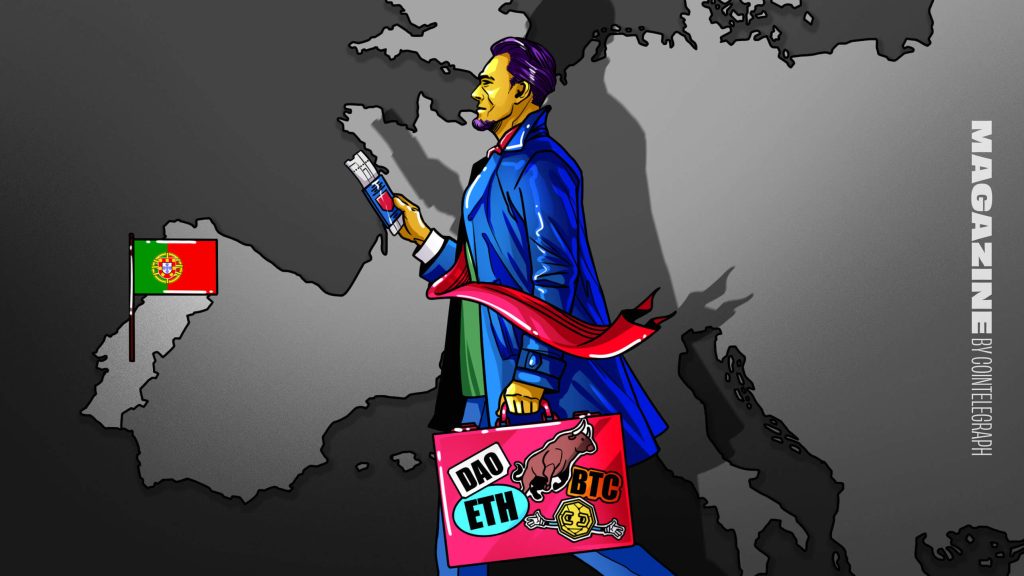
Portugal first became popular for a lack of crypto taxes (CGT is now 0% for long term holds and 28% for short term trades) and later saw a huge influx of crypto folk during the pandemic, along with those fleeing the Ukraine/Russia war.
While a Golden Visa is on offer, most opt for the Digital Nomad visa as it only requires international earnings of around $4,000 a month and for applicants to have about $12,000 in savings.
The World Crypto Rankings noted its crypto scene was driven more by lifestyle and community than institutional force, but added that “If regulatory clarity strengthens and infrastructure matures, Portugal could evolve from a destination of interest into a fully fledged crypto hub.”
Portugal’s Henley Crypto Adoption Index 2025 ranking: #17, score 31.1/60.
The World Crypto Rankings: #21.
Read also
UAE – Best emerging hub for crypto businesses
Switzerland and Singapore moved early to become destinations for crypto businesses. But the UAE has quickly caught up thanks to its tax and regulatory policies, high-profile conferences like Token2049, and media coverage of the influx of crypto’s wealthiest people, including Changpeng Zhao.
Crypto-friendly regulatory moves started in 2018 with the Abu Dhabi Global Market economic zone and picked up steam in 2022 with Dubai’s Virtual Assets Regulatory Authority. Around 1,500 to 1,800 crypto companies are estimated to operate out of the UAE.
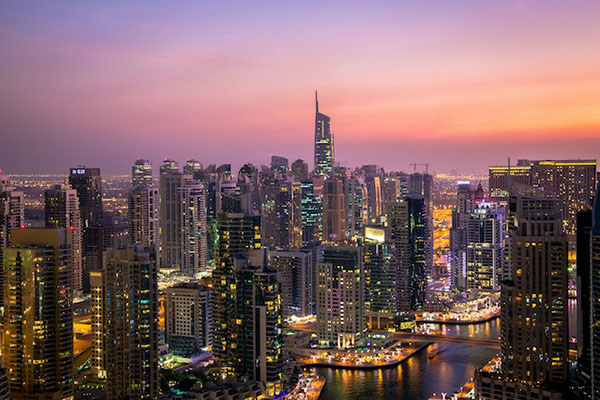
It helps that the UAE is awash with dollars. Economy Middle East estimates it made $30 billion in crypto investments — institutional trading and transfers — in the year up to June 2024. Abu Dhabi’s sovereign wealth fund has a tech arm called MGX. Earlier this year, it invested $2 billion in Binance, the first exchange to be authorized by the UAE with a global license within the ADGM.
With zero taxes on trading, gains, staking or mining rewards, around 25.3% of the population own digital assets.But most hold it simply as an investment, given relatively low adoption for payments and exchange volumes.
Some argue the UAE’s record on human rights and freedoms doesn’t match up to the industry’s libertarian ideals of permissionless and censorship resistance. Others argue it’s safer and better run than the US and is a great place to do business.Its reputation for being one of the safest and most stable countries in the region has also been affected by the Iran war.
UAE’s Henley Crypto Adoption Index rankings: #5, score 42.9/60.
World Crypto Rankings: #5.
Lithuania – The surprising crypto hub you rarely hear about
It doesn’t get a lot of love or attention from crypto media, but Lithuania is actually third on the World Crypto Rankings. The population is digitally fluent and engaged with DeFi, yet the real reason the country punches above its weight is its early adoption of a favorable regulatory environment. Its licensing scheme attracted fintech and crypto companies seeking a gateway to European crypto activity.

By 2024, this country of just 2.5 million people had around 580 crypto companies and service providers, more than almost anywhere else in the EU. That’s been pruned back to 369 as of April last year, as scores of those companies had difficulty complying with more stringent MICA licensing requirements. Lithuania ranks fifth globally for the number of registered Virtual Asset Service Providers (VASPs). Many international firms have chosen the country as their European base, and Binance, Kraken, OKX, Uphold and Bitget have been licensed by the Bank of Lithuania.
There’s even talk of Lithuania becoming the EU’s primary tokenization hub alongside Switzerland, after Robinhood selected the country as home for its launch of tokenized US stocks. It will depend on the Bank of Lithuania’s regulatory review of the “legality and compliance” of the stock tokens, prompted by concerns over the tokenization of OpenAI’s private stocks.
Local firms include crypto banking platform Bxlend, IXFI exchange in Vilnius, and the wallet and digital money platform Trustee Plus.
Henley Crypto Adoption Index 2025 ranking: N/A.
World Crypto Rankings: #3.
Hong Kong – Asian crypto hub that acts as China’s crypto sandbox
Hong Kong, one of the world’s most advanced financial and trading hubs, has flipped from hostility to rolling out the red carpet for crypto.
Read also
With crypto trading and mining strictly forbidden on the mainland, Hong Kong is seen by many as a crypto sandbox for Chinese officials to experiment. Legal clarity, existing fintech infrastructure and the launch of crypto ETFs have quickly transformed Hong Kong into one of Asia’s most important crypto hubs.
Kumardev Chatterjee, founder of the Global Crypto Forum, told Cointelegraph Magazine earlier this year that crypto activity had noticeably ramped up over the past few years.
“Web3 activity in Hong Kong has been growing steadily since 2024, with major steps such as the launch of BTC and ETH ETFs, [and the] hosting of important conferences such as Bitcoin Asia and Consensus HK.”
HashKey, the city state’s largest crypto exchange, recently went public in a $206 million initial public offering.
But with crypto policy driven by Beijing, regulations are far from a free for all.
Retail is allowed to trade crypto, but face suitability and asset tests (requiring the equivalent of $1M USD for unrestricted access). Licensed platforms can only offer large cap tokens that have been pre-approved by the Securities and Futures Commission which so far include just Bitcoin, Ether, Avalanche and Chainlink.
Growing demand from merchants looking to quickly settle cross-border transactions has seen USDT cross-border trade volumes for Chinese clients grow five-fold since 2021, according to Crypto HK. In August, Hong Kong rolled out its Stablecoin Ordinance, with companies rushing in to secure a small number of licenses on offer.
China’s central bank, however, knocked back plans by JD.com and Ant Group to launch yuan-backed stablecoins in the territory. There are further concerns that requirements by issuers to identify all stablecoin holders may deter adoption.
The good news is there’s no capital gains tax.
Henley Crypto Adoption Index 2025 ranking: #2, score 45.7/60.
World Crypto Rankings: #10.
Subscribe
The most engaging reads in blockchain. Delivered once a
week.


Andrew Fenton
Andrew Fenton is a writer and editor at Cointelegraph with more than 25 years of experience in journalism and has been covering cryptocurrency since 2018. He spent a decade working for News Corp Australia, first as a film journalist with The Advertiser in Adelaide, then as deputy editor and entertainment writer in Melbourne for the nationally syndicated entertainment lift-outs Hit and Switched On, published in the Herald Sun, Daily Telegraph and Courier Mail. He interviewed stars including Leonardo DiCaprio, Cameron Diaz, Jackie Chan, Robin Williams, Gerard Butler, Metallica and Pearl Jam. Prior to that, he worked as a journalist with Melbourne Weekly Magazine and The Melbourne Times, where he won FCN Best Feature Story twice. His freelance work has been published by CNN International, Independent Reserve, Escape and Adventure.com, and he has worked for 3AW and Triple J. He holds a degree in Journalism from RMIT University and a Bachelor of Letters from the University of Melbourne. Andrew holds ETH, BTC, VET, SNX, LINK, AAVE, UNI, AUCTION, SKY, TRAC, RUNE, ATOM, OP, NEAR and FET above Cointelegraph’s disclosure threshold of $1,000.
Disclaimer
Cointelegraph Magazine publishes long-form journalism, analysis and narrative reporting produced by Cointelegraph’s in-house editorial team with subject-matter expertise.
All articles are edited and reviewed by Cointelegraph editors in line with our editorial standards.
Content published in Magazine does not constitute financial, legal or investment advice. Readers should conduct their own research and consult qualified professionals where appropriate. Cointelegraph maintains full editorial independence.