
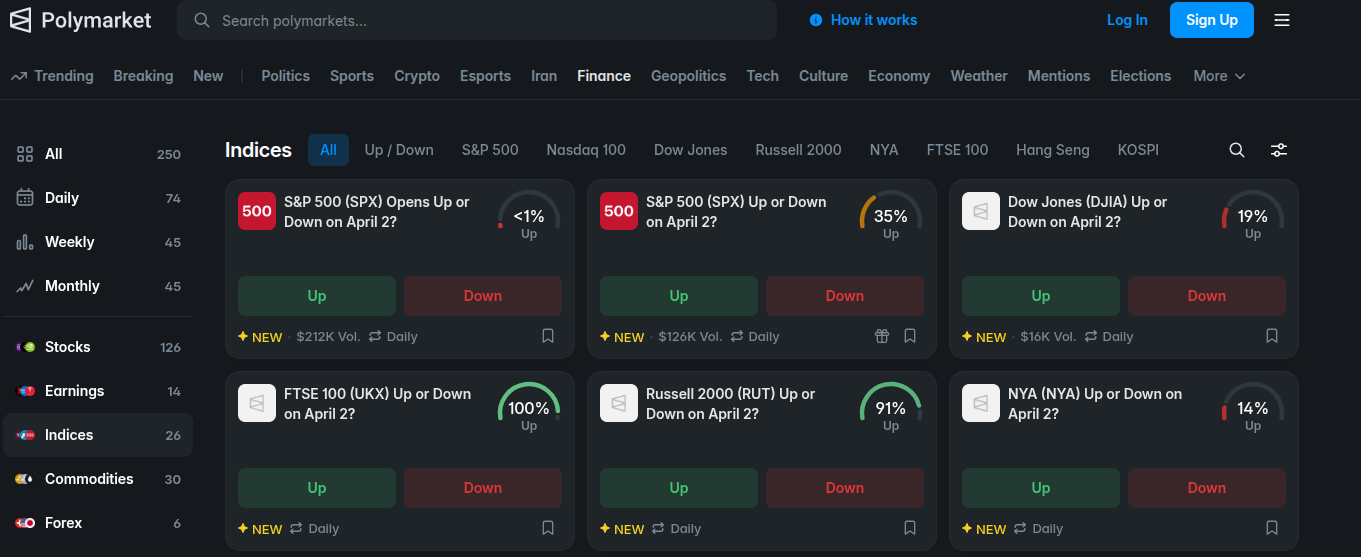
Polymarket has added markets tied to equities, commodities and exchange-traded funds, using price data from blockchain oracle provider Pyth Network as the resolution source to determine outcomes for daily contracts.
The new markets include daily up-or-down and closing price contracts for major equity indexes, commodities such as gold and oil, and a range of US-listed stocks, with outcomes settled automatically based on Pyth’s real-time price feeds. The contracts reset at the end of each trading session.
According to the announcement, the offering includes more than a dozen US-listed stocks, including Tesla, Nvidia and Apple, alongside commodities and equity indices.
By making Pyth the resolution layer for these markets, Polymarket is supplanting manual or exchange-specific references with a standardized data source aggregated from trading firms and market makers.
Zug, Switzerland-based Pyth said it also launched a data interface called Pyth Terminal, where users can track live price feeds and the reference values used to settle markets on Polymarket. Traders can follow a live “price to beat” that updates continuously as markets move.
Polymarket allows users to take positions on the outcomes of real-world events, such as sports, elections, financial markets and weather, with contracts resolving based on whether specific conditions are met.
Last week, Intercontinental Exchange, the parent company of the New York Stock Exchange, said it had completed a $600 million cash investment in Polymarket and plans to acquire up to an additional $40 million in shares from existing holders as part of a broader multibillion-dollar commitment to the platform.
Related: Polymarket fee expansion boosts revenue amid regulatory pressure
Oracles expand beyond crypto into real-world data infrastructure
Oracle networks, which bring offchain data such as prices, foreign exchange rates and commodities onto blockchains, are expanding beyond crypto into financial, government and prediction-based applications.
Their role has begun to extend into official data systems, with Chainlink and Pyth Network selected by US government agencies to publish economic data onchain, including GDP and inflation metrics. The announcement sent the PYTH (PYTH) token up more than 70% on the day, lifting its market capitalization past $1 billion.
The announcement comes as oracle providers are being used to power prediction markets and real-world event data, with RedStone integrating data from the CFTC-regulated platform Kalshi across more than 110 blockchains in October.
They are also playing a growing role in connecting crypto platforms to traditional financial markets. In January, Chainlink said it would roll out 24/5 price data for US equities and ETFs to crypto platforms, enabling trading, lending and derivatives tied to tokenized stocks beyond standard market hours.
The following month, Ondo Finance said it had integrated Chainlink as the data provider for tokenized US equities on its Ondo Global Markets platform, where the feeds are used to support lending and collateralization.
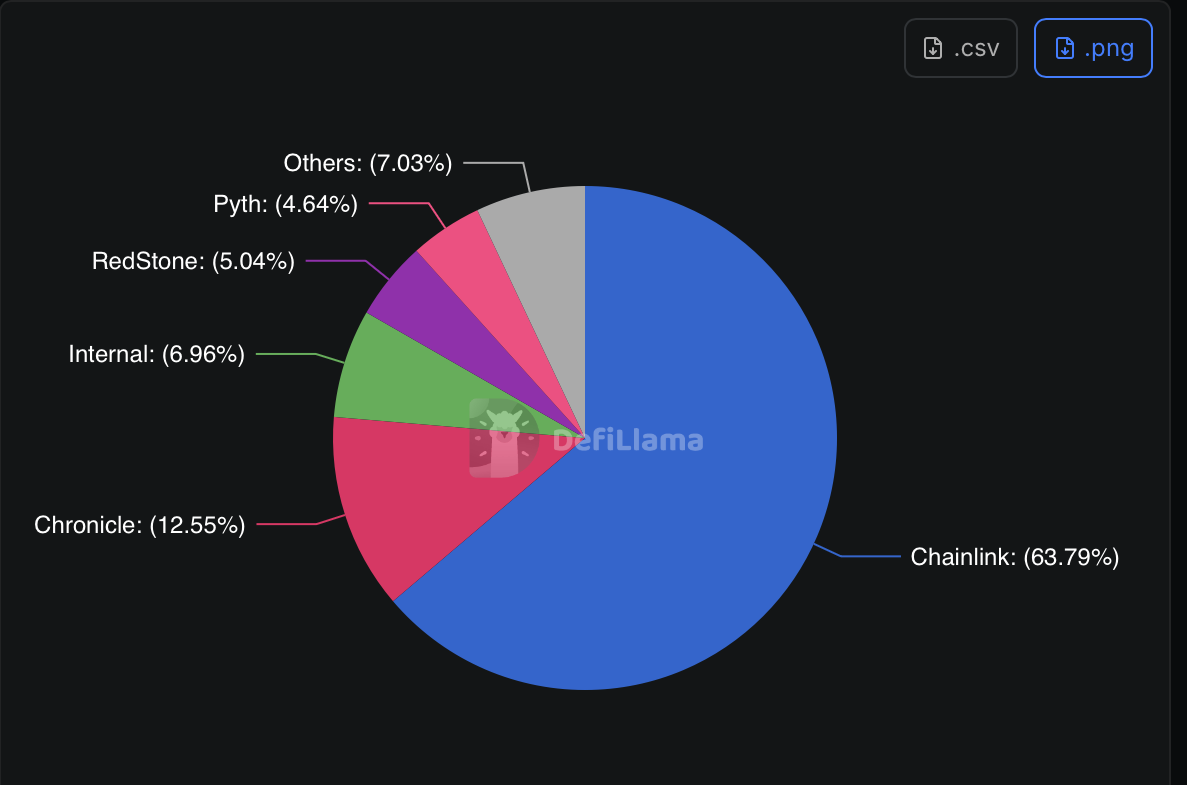
Data from DeFiLlama shows a highly concentrated oracle market, with Chainlink accounting for around 64% of total value secured. Other providers, including RedStone and Pyth Network, hold much smaller shares at around 5% each.
Magazine: AI agents will kill the web as we know it: Animoca’s Yat Siu


