
Key Takeaways
- SpaceX raised $75 billion in the largest initial public offering (IPO) ever recorded, opening SPCX at $150 on June 12, 2026.
- Elon Musk’s net worth crossed $1.1 trillion, making him the first individual to reach trillionaire status.
- Starlink generated $1.19B in Q1 operating profit, but SpaceX’s artificial intelligence (AI) unit burned $2.47B in the same period.
Record Raise, Record Wealth
The company priced 555.56 million shares at $135 apiece on June 11, pulling in $75 billion in a primary offering that more than doubled Saudi Aramco’s 2019 raise. When the stock opened at $150 on Nasdaq under ticker SPCX on June 12, the math on founder Elon Musk’s net worth changed immediately.
By midday, Elon Musk‘s stake had added roughly $188 billion in value. Forbes pegged his total net worth at approximately $1.1 trillion. Bloomberg’s tracker landed in a similar range. Musk became the world’s first verified trillionaire, crossing a threshold no individual wealth estimate had previously cleared.
His SpaceX ownership sits near 38%, covering approximately 6.4 billion shares including options. Tesla, Neuralink, xAI, and The Boring Company round out the rest of his holdings, but the SpaceX opening pop was the decisive move.
How the Stock Traded
SPCX opened at $150 and moved fast. Within 30 minutes, the stock was trading near $165. It reached an intraday high of $176.45, up about 30.7% from the IPO price. Volume hit approximately 475.8 million shares, reflecting deep institutional and retail participation.
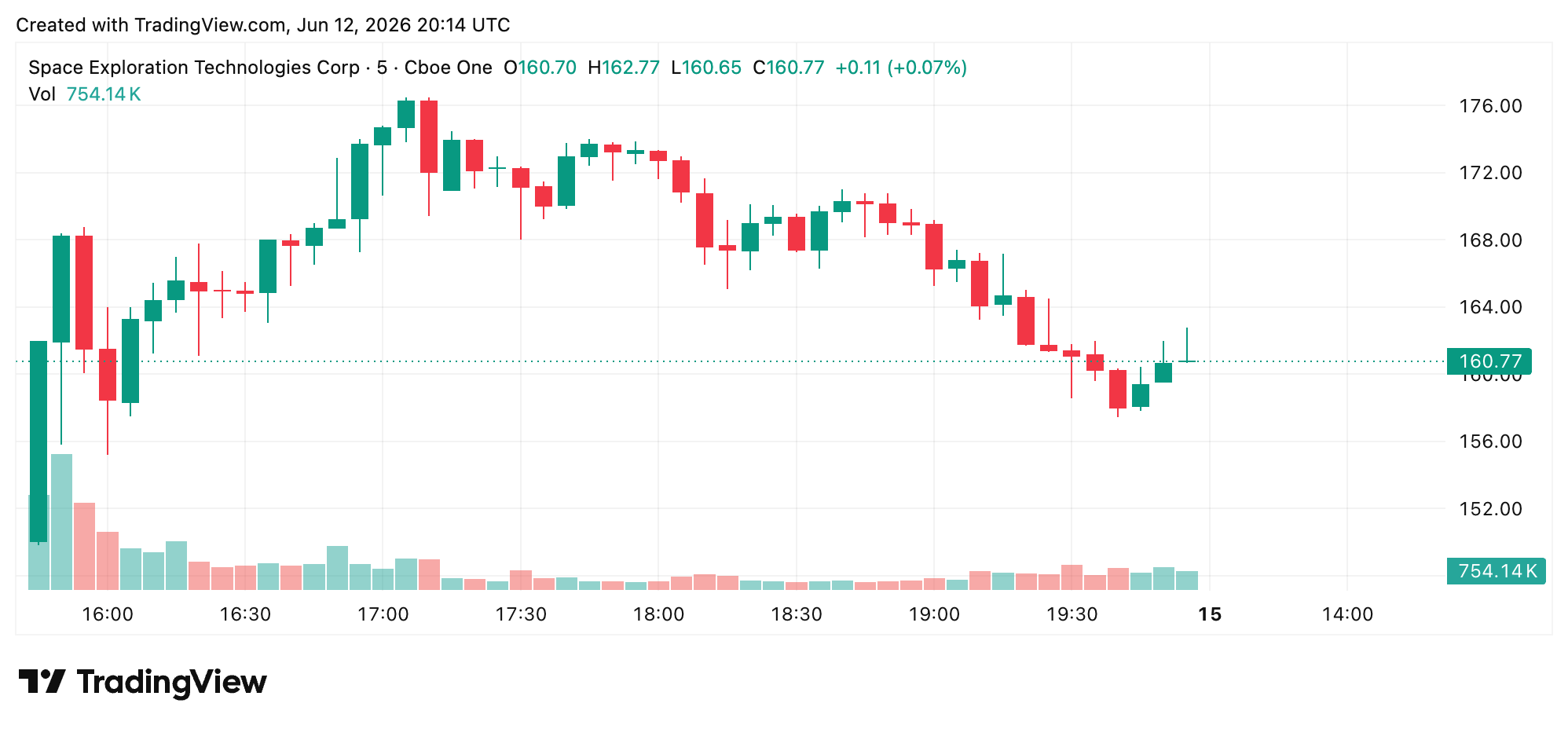
By 3:45 p.m. ET, the stock had cooled to around $159, still up 17.8% from the offer price. The fade from peak was expected. Profit-taking and increased share supply after the opening frenzy typically compress first-day gains in large listings.
Retail investors received a reported 22.5% allocation, an unusually high figure for an offering of this size.
What the Financials Actually Show
SpaceX reported roughly $18.7 billion in full-year revenue and a $4.9 billion net loss in its most recent fiscal year. In the first quarter alone, the company logged a $1.94 billion operating loss on $4.69 billion in revenue.
Starlink is the one division carrying the income statement. SpaceX’s connectivity segment generated $1.19 billion in operating profit in Q1, making it the only profitable unit in the filing.
The AI division tells a different story. It produced $818 million in Q1 revenue against $2.47 billion in losses and accounted for 76% of the company’s $10.1 billion in Q1 capital spending. Investors are funding a bet on future dominance across launch, satellite connectivity, defense, and orbital AI infrastructure, not a clean earnings story.
What It Means for Markets
JPMorgan data showed hedge funds trimmed exposure to major U.S. tech stocks ahead of the IPO. Some institutional capital rotated out of Magnificent Seven positions to free up room for SPCX. That makes the debut a broader market liquidity event, not just a SpaceX milestone.
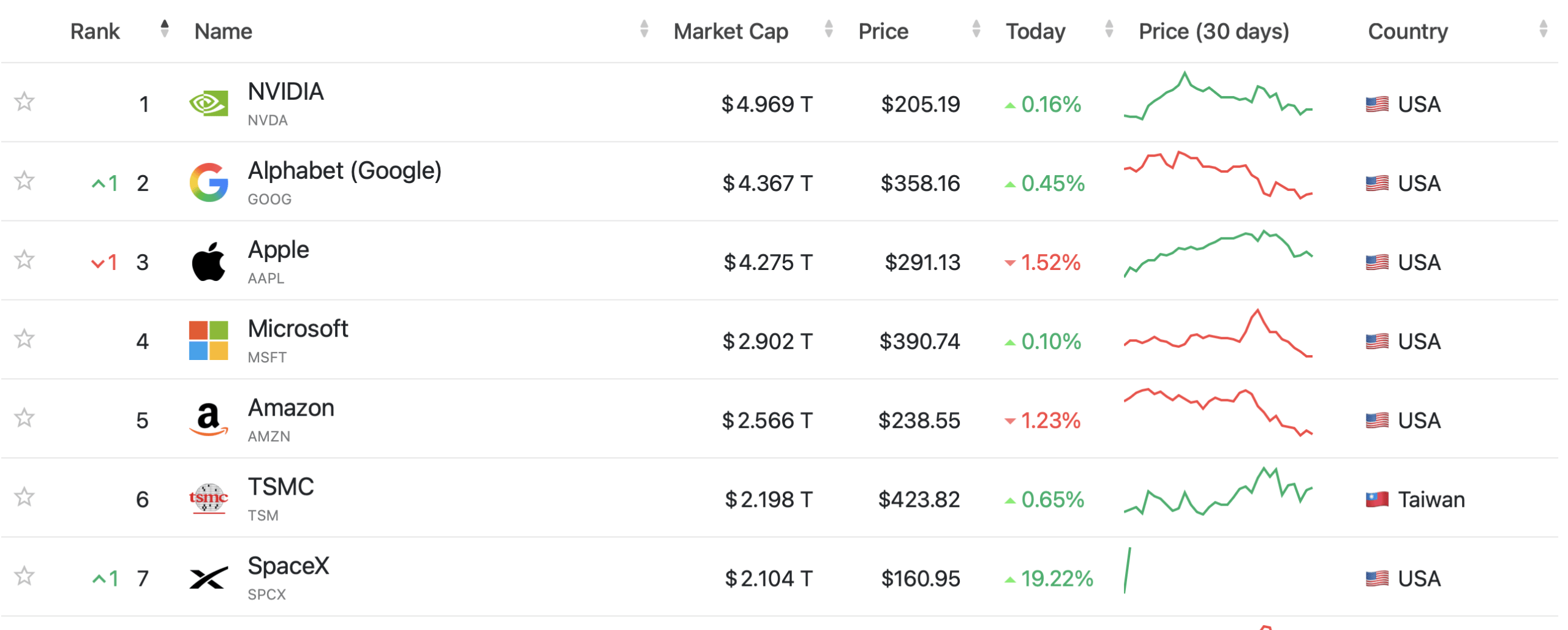
SpaceX now sits among the most valuable public companies in the United States after a single trading session. The valuation rests on Starlink‘s recurring revenue, reusable rocket dominance, NASA and commercial contracts, and long-term plans for Mars and space-based infrastructure.
What Comes Next
Friday was a market coronation. The harder test begins now: whether Starlink profits and launch leadership can grow fast enough to justify a $2 trillion-plus valuation while the AI division continues to consume capital at a pace that would stress most balance sheets.
Musk’s net worth, now officially in 13-digit territory, will move with the stock. Paper wealth based on equity prices can shift quickly. The next earnings report will give investors their first look at whether the filing’s numbers are trending in the right direction.


