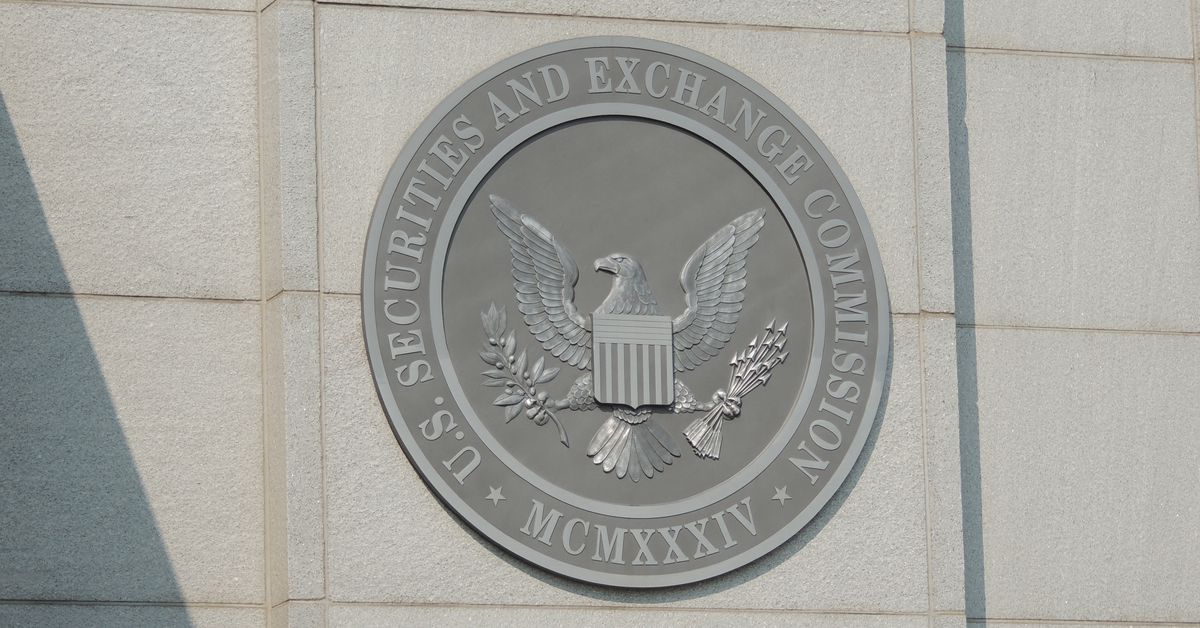
Earlier this week, the SEC identified tokens issued by foundations and companies or tied to protocols Polygon (MATIC), Sandbox (SAND), Filecoin (FIL), Axie Infinity (AXS), Chiliz (CHZ), Flow (FLOW), Internet Computer (ICP), Near (NEAR), Voyager (VGX), Dash (DASH) and Nexo (NEXO) as securities. Source
Tag: Cardano
Cardano Developer Rejects SEC Claim Its ADA Token Is a Security
“Under no circumstances is ADA a security under U.S. securities laws,” IOG said. Source
Solana (SOL), Cardano (ADA) and Polygon (MATIC) Lead Cryptocurrency Crash After SEC Suit Against Binance and CZ
Among the allegations are that the exchange offered a number of unregistered securities to the general public, among them not just Binance’s BNB token and its BUSD stablecoin, but also Solana (SOL), Cardano (ADA), Polygon (MATIC), Coti (COTI), Algorand (ALGO), Filecoin (FIL), Cosmos (ATOM), Sandbox (AXS) and Decentraland (MANA). Source
Cardano DEX Minswap Sees Volume Jump Driven by SNEK, BANK Meme Coins
Volumes surged from just over $1 million at the start of May to $18 million on Tuesday, data from Minswap shows. Source
Bitcoin Ordinals ‘could look better’ on Cardano
In a recent YouTube AMA session, Charles Hoskinson declared that Cardano, a blockchain network, remains fully dedicated to decentralization. Ordinals functions better on Cardano During the AMA, the tech entrepreneur also suggested that Bitcoin Ordinals is best suited for Cardano since the blockchain, he claims, has a better ecosystem. Ordinals involves a technology that allows “inscribing” each satoshi with a distinct label and extra details. Accordingly, each inscription is unique and can be traced in Bitcoin or any other network they have been inscribed in. Specifically, Ordinals allow users to store various…
InQubeta presale gaining traction among bitcoin and cardano fans
Share Share on Twitter Share on LinkedIn Share on Telegram Copy Link Link copied Following recent price swings, enthusiasts have been bullish, exploring and seeking to invest in some of the top cryptocurrency projects. One of them is InQubeta (QUBE). InQubeta is a platform for users to invest in artificial intelligence (AI) startups, and its presale is currently successful. Its native token, QUBE, is being analyzed and considered by crypto enthusiasts, particularly those interested in top cryptocurrencies like bitcoin (BTC) and cardano (ADA). The increasing number of people in the InQubeta…
Four open source Plutus Application Backend (PAB) for Cardano
Decentralized applications (dApps) are becoming increasingly popular as more businesses and developers seek to leverage the benefits of decentralized networks such as blockchain. However, developing dApps can be complex and time-consuming. To simplify the process, developers can use frameworks that provide a set of tools and functionalities to test, compile, deploy and debug their applications. There are several popular frameworks for developing decentralized applications. In this article, we will explore the Cardano ecosystem and learn about the smart contract framework available to developers. Plutus: Cardano’s smart contract language Cardano’s Plutus programming…
Cardano introduces Hydra node for enhanced scalability
According to developer Sebastian Nagel, Cardano, one of the most widely used blockchain platforms, has achieved a significant milestone by introducing the first Hydra node compatible with the mainnet. The development marks a crucial step towards enhancing Cardano’s scalability and flexibility, a significant focus for the platform. Per Input Output, the parent company of Cardano, Hydra, is a collection of layer 2 protocols that aim to improve the blockchain’s scalability. The protocols allow faster and cheaper transactions, making the blockchain more flexible for various use cases. 🐲 0.10.0 is out!…
Cardano deploys the first Hydra Head, 3 years after proof-of-concept
Cardano, a smart contracting platform, has deployed the Hydra Head on the mainnet, marking a significant achievement three years after the proof-of-concept was introduced in 2020. This development is crucial to Cardano’s ongoing efforts to enhance transaction processing capabilities for decentralized applications (dapps) in the current Basho stage. Hydra Head is the first of a series of layer-2 protocols designed to bolster the platform’s scalability and adaptability for various use cases, prioritizing swift and cost-effective transactions. It is particularly important as Cardano gradually improves its mainnet to handle enterprise-level, high-throughput dapps. Hydra…
Cardano reveals development update ahead of Voltaire age
In preparation for the arrival of the Voltaire age, the blockchain known as Cardano (ADA) has announced some recent ecosystem improvements. Notable among the company’s accomplishments is the progress it has made in the age of the Conway ledger and the creation of CIP-1694. The last stage of cardano’s evolution is called the Voltaire period, and its primary objective is to create an entirely decentralized decision-making system. CIP-1694 is the first iteration of cardano’s on-chain governance, and the success of this initiative will primarily be determined by the degree to…