Two days after approval, spot Bitcoin exchange-traded funds (ETFs) are receiving an impressive amount of inflow, according to data from BitMEX Research. The analytics company reported a total net inflow of $532 million for spot Bitcoin ETFs, with BlackRock IBIT leading the pack at $498 million. Fidelity’s FBTC followed at $422 million, and 21 Shares’ ARKB posted a net inflow of $105 million. However, not all funds experienced gains. Grayscale’s GBTC saw a sizeable outflow of $579 million, including a $484 million outflow on the second day alone, as reported…
Tag: ETFs
BlackRock’s Larry Fink points to value in Ethereum ETFs, crypto asset class
Larry Fink, CEO of BlackRock, likened Bitcoin to gold a day after spot BTC ETFs went live but forecasted slim chances for cryptos as currency. Speaking with CNBC on digital assets, ETFs, and tokenization, BlackRock’s CEO noted that the world’s largest asset manager sees value in spot Ethereum (ETH) ETFs as another crypto-related investment product following the successful launch of identical funds underpinned by Bitcoin (BTC), crypto’s biggest token. Fink clarified that BlackRock views cryptocurrencies as a prospective asset class, with Bitcoin utility revolving around storing and protecting wealth akin…
Bitcoin ETFs have a key difference from their stock fund counterparts
The Securities and Exchange Commission pushed for bitcoin ETFs to have a key difference from major stock funds, and that decision’s impact on how the funds trade will only become clear over time. The bitcoin funds that launched on Thursday are using a share redemption process that turns the underlying crypto into cash. Most ETFs primarily use an in-kind redemption process, where the underlying asset does not have to be actually sold. While the rules around share redemption do not directly impact the smaller trades that retail investors do in…
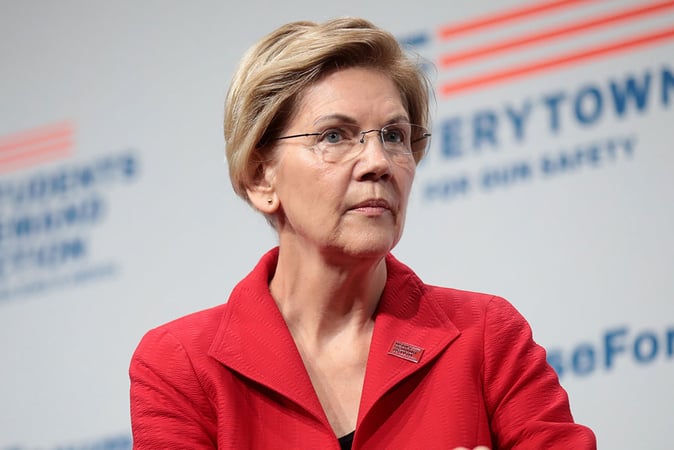
Senator Elizabeth Warren Criticizes SEC’s Approval of Bitcoin ETFs
While Warren has expressed her dissatisfaction with the approval of the 11 BTC ETFs, some lawmakers in the US support the SEC’s decision. In a recent development, US Senator Elizabeth Warren, a key Democratic figure from Massachusetts and a Senate Banking Committee member, has strongly criticized the Securities and Exchange Commission (SEC) for its recent approval of spot Bitcoin exchange-traded funds (ETFs). On January 10, 2024, the SEC authorized 11 asset managers in the US to offer Bitcoin (BTC) spot ETFs for customers in the region. The move marked the…
South Korea’s Financial Regulator Says US Bitcoin ETFs Defy Local Law
Authorities in South Korea have warned local financial institutions from offering spot crypto ETFs following SEC approval in the US. South Korea’s financial regulator, the Financial Services Commission (FSC), has said that the spot Bitcoin ETFs recently approved in the US may contravene the country’s law. In an official statement published on Friday, the regulator sounded a note of warning without providing extensive details: “Domestic securities firms brokering overseas-listed Bitcoin spot ETFs may violate the existing government stance on virtual assets and the Capital Markets Act.” Last month, FSC Chief Kim So-young…
Korea’s FSC bars local brokers from offering spot Bitcoin ETFs overseas
South Korea’s financial regulator has declared that domestic securities firms are barred from offering spot Bitcoin exchange-traded funds (ETFs) in international markets. South Korea‘s Financial Services Commission (FSC) said in a press release on Jan. 12 that domestic securities firms cannot offer spot Bitcoin ETFs overseas, as it may violate the existing government stance on virtual assets. Despite the ban, the FSC acknowledged the possibility of reviewing its stance on crypto regulation, without providing specific details. As per Korean news outlets, the local securities forms, including Mirae Asset Securities and…
Robinhood Lists All 11 New Spot Bitcoin ETFs
US-based customers may now access all 11 spot Bitcoin ETFs in both retirement and brokerage accounts through Robinhood Financial. Robinhood has stayed true to its word by listing all new spot Bitcoin exchange-traded funds (ETFs) on its platform. The US Securities and Exchange Commission (SEC) approved spot Bitcoin ETFs on Wednesday, including funds from BlackRock, Grayscale, Fidelity, Invesco, Valkyrie, Bitwise, Hashdex, BZX, VanEck, WisdomTree, and Franklin Templeton. Shortly after the landmark decision by the SEC to approve those spot Bitcoin ETFs, Robinhood CEO Vlad Tenev revealed the company’s next line…
Robinhood opens all 11 spot Bitcoin ETFs for trading
Online broker Robinhood has added all 11 spot Bitcoin (BTC) ETFs approved by U.S. Securities and Exchange Commission (SEC). According to the company, all approved exchange-traded funds are now available for trading on the platform. As another benefit, the platform offers a 1% bonus when users transfer their brokerage account into Robinhood. Before this, the company’s CEO, Vlad Tenev, noted that Robinhood would list all 11 spot Bitcoin ETFs “as soon as possible.” This solution facilitates the integration of crypto assets into TradFi. Also, according to Tenev, spot Bitcoin ETFs…
South Korean Financial Regulator Says U.S. Bitcoin ETFs May Violate Local Law
Please note that our privacy policy, terms of use, cookies, and do not sell my personal information has been updated. The leader in news and information on cryptocurrency, digital assets and the future of money, CoinDesk is an award-winning media outlet that strives for the highest journalistic standards and abides by a strict set of editorial policies. In November 2023, CoinDesk was acquired by Bullish group, owner of Bullish, a regulated, institutional digital assets exchange. Bullish group is majority owned by Block.one; both groups have interests in a variety of…
Gary Gensler’s Long, Embarrassing Battle Against Bitcoin ETFs
Moreover, Gensler doesn’t sound particularly “merit neutral” (which is how the SEC describes its role in regulating markets) when drawing a comparison between bitcoin and gold, saying one is a commodity with industrial and consumer use and the other is primarily used for ransomware, money laundering, sanctions-evasion and terrorist financing, when not for pure speculation. Source CryptoX Portal