
When FTX filed for bankruptcy on Nov. 11, 2022, it sent shockwaves throughout the crypto world, erasing billions in market liquidity and shattering confidence in centralized exchanges.
The dramatic collapse became a turning point for the digital asset industry, triggering calls for stronger transparency and reactions from regulators.
Three years after the exchange’s collapse, transparency initiatives across the crypto industry have proliferated. Proof-of-reserves attestations, audits and onchain analytics represented progress. Still, many of those reforms remain works in progress, and some of FTX’s creditors have yet to be made whole.
CEXs forced to adjust post FTX
Centralized exchanges bore the full impact of the post-FTX crisis of confidence. In the weeks following the bankruptcy, users withdrew more than $20 billion from major trading platforms, according to CoinGecko data.
In response, exchanges began publishing proof-of-reserves (PoR) attestations to demonstrate solvency. Binance released its first report on Nov. 10, 2022, followed by a Merkle Tree-based report a few days later that allowed users to verify its Bitcoin (BTC) holdings.
Around that time, OKX, Deribit and Crypto.com all published proofs-of-reserve amid fears of contagion and uncertainty surrounding crypto exchanges.
While these efforts offered some visibility into reserves, most relied on snapshots rather than continuous audits and often drew criticism from the crypto community.
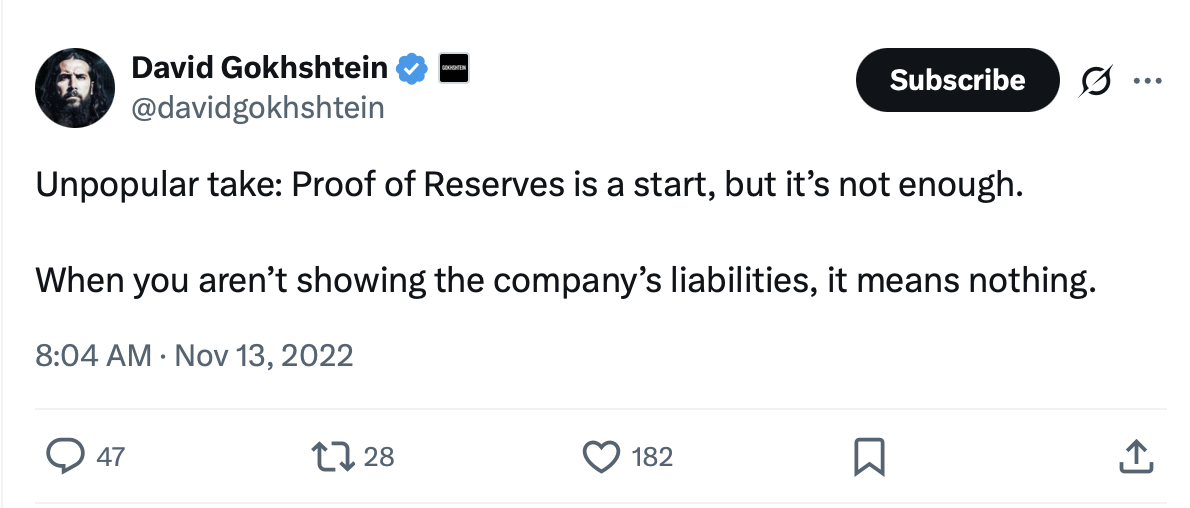
One X user, David Gokhshtein, said at the time that publishing proof-of-reserves wasn’t enough. “When you aren’t showing the company’s liabilities, it means nothing,” he wrote.
Thomas Perfumo, Kraken’s global economist, told Cointelegraph that the “hard lessons of the past were never an indictment of crypto,” adding that the FTX debacle reinforced the “governance and integrity matter.”
Decentralized finance protocols also adapted following the collapse, pushing calls not only for transparency but also for self-custody as an essential safeguard for crypto users.
“We’ve seen a notable shift,” Eddie Zhang, president of dYdX Labs, told Cointelegraph. According to Zhang, DeFi now operates under stronger risk frameworks while “governance is becoming more sophisticated,” with systems that “withstand market shocks.”
Related: FTX’s 2-year repayment delay is a ‘win,’ claims trader who predicted FTX’s collapse
Creditors still waiting for closure
Despite the industry’s transparency campaigns and recent regulations, such as the GENIUS Act in the United States and the European Union’s Markets in Crypto-Assets Regulation, some FTX creditors have yet to recover their losses.
According to a Nov. 9 update by Sunil Kavuri, a FTX creditor representative, the exchange has distributed $7.1 billion to creditors across three rounds so far.
In January, FTX announced the distribution of more than $1.2 billion in repayments to creditors who fulfilled certain requirements before Jan. 20. However, according to Sunil, only $454 million was effectively paid in the first round, going to small claimants with balances under $50,000.
A larger $5 billion payout followed on May 30, while the latest round took place on Sept. 30 and distributed another $1.6 billion to creditors. The next distribution is expected in January 2026, though it has not been confirmed by the FTX estate.
FTX’s total recovered assets were estimated at about $16.5 billion in October 2024.
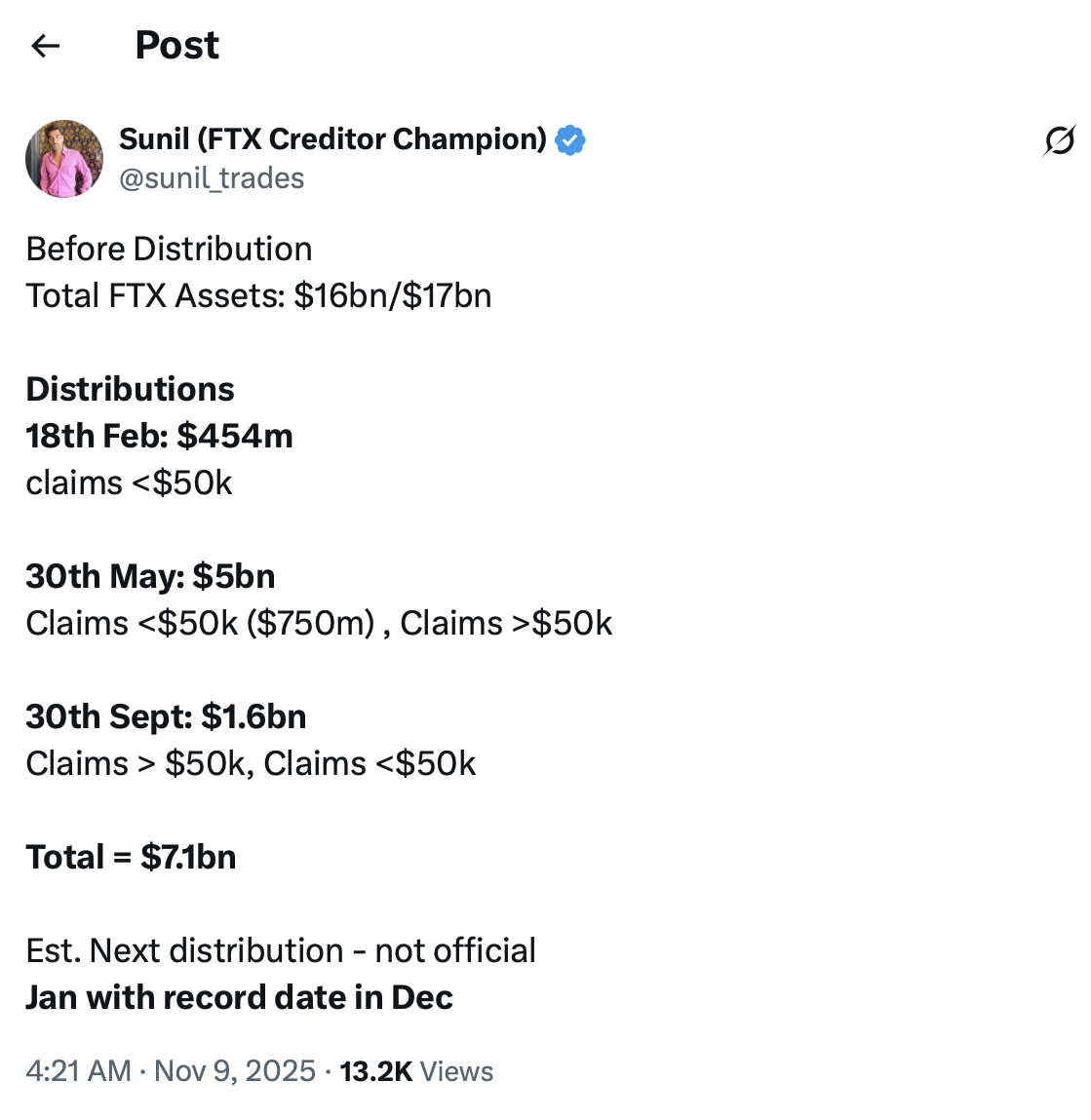
According to Kavuri, because repayments are being made in US dollars rather than in-kind crypto assets, creditors are missing out on the market’s rebound since 2022.
Bitcoin, valued at $16,797 the day after FTX filed for bankruptcy, was trading around $103,000 on Tuesday.
Even with cash repayments exceeding the original claim amounts, real recovery rates could range from 9% to 46% when adjusted for current crypto prices, Kavuri said.
Related: FTX drops ‘restricted countries’ motion but warns it may refile
SBF looks for a lifeline
Former FTX CEO Sam Bankman-Fried is serving a 25-year prison sentence for fraud and conspiracy but has appealed his conviction, arguing that he was denied the presumption of innocence and barred from presenting evidence that FTX was, in fact, solvent in November 2022. His legal team appeared before the US Court of Appeals for the Second Circuit on Nov. 4.
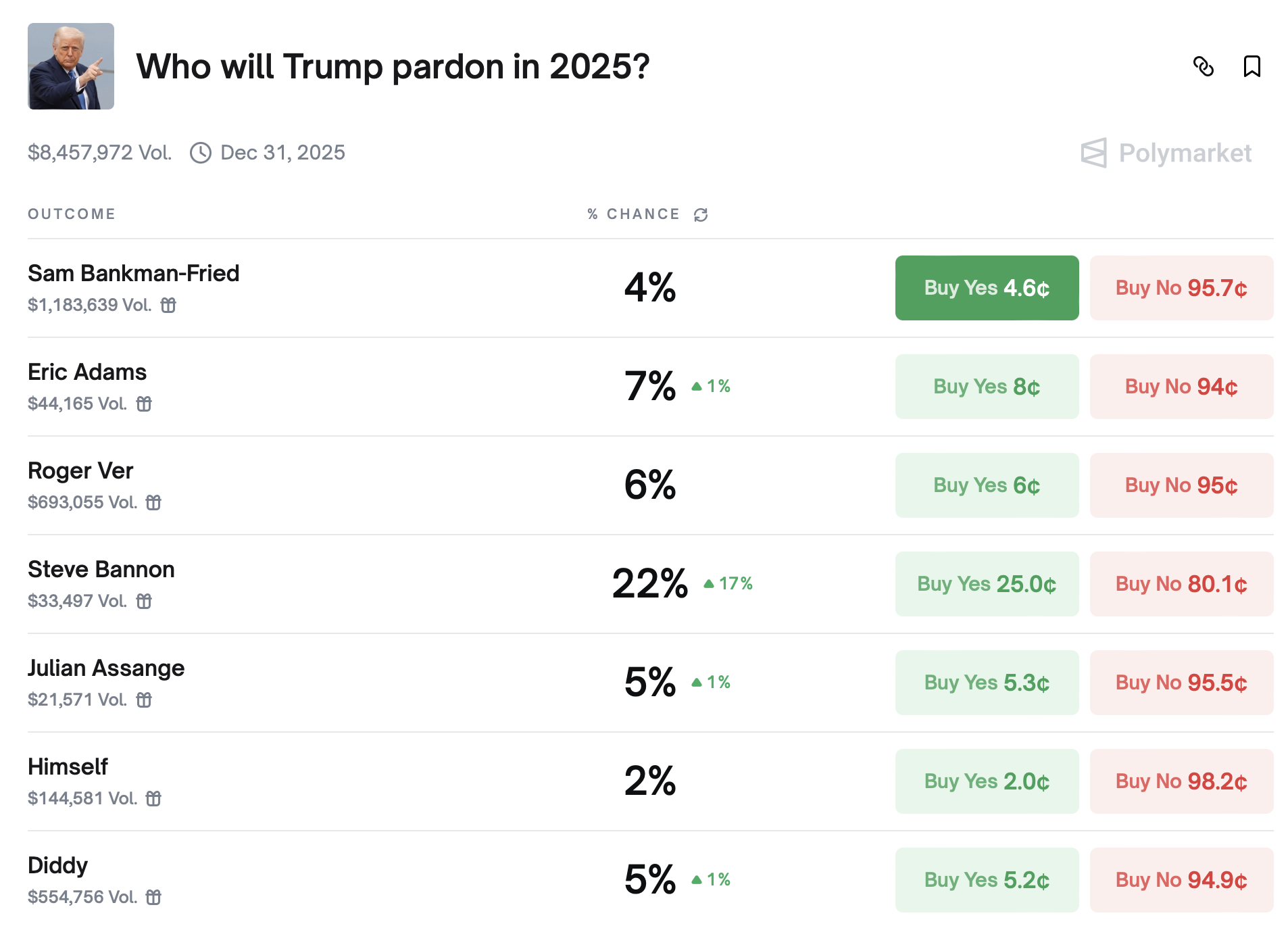
Prediction market Polymarket currently assigns only a 4% probability that Bankman-Fried will receive a presidential pardon in 2025. Former Alameda Research CEO Caroline Ellison, who cooperated with prosecutors, began serving her sentence in late 2024 and is projected to be released in mid-2026.
Magazine: Good luck suing crypto exchanges, market makers over the flash crash


