
Crypto markets are moving lower, but the broader picture remains one of caution rather than panic. Bitcoin and Ethereum have both slipped after weeks of subdued trading, while capital has not rotated into higher-risk assets.
Summary
- Bitcoin and Ethereum are moving lower, but without signs of panic, as volatility expands only modestly from previously compressed levels.
- Ethereum continues to track Bitcoin closely, with no evidence of capital rotating into higher-risk assets or altcoins.
- Bitcoin dominance remains elevated, pointing to a defensive market posture and muted risk appetite across crypto.
At press time, Bitcoin (BTC) was trading near $69,500, a level not seen in over a year. Ethereum (ETH) was changing hands at around $2,060, lower by nearly 4% over the same period.
The three charts below show why the market remains low-conviction, even as prices fall.
Bitcoin volatility breaks lower after weeks of compression
Bitcoin spent most of December and early January trading within a tight range. Bollinger Bands on the daily chart narrowed steadily, signalling falling volatility and limited trader engagement.
The Average True Range (ATR) has started to rise, but remains below the range typically associated with panic-driven selling.
Bitcoin has broken below the lower Bollinger Band, indicating a shift in momentum. However, the move has not been accompanied by a sharp rise in ATR. Volatility is picking up, but only modestly.
This suggests the recent selloff reflects position trimming in a low-liquidity environment, rather than panic-driven capitulation.
Ethereum tracks Bitcoin with no sign of decoupling
Ethereum’s price action closely mirrors Bitcoin’s. ETH also traded inside a narrowing range before breaking lower. Like Bitcoin, it failed to hold key support levels once volatility expanded.
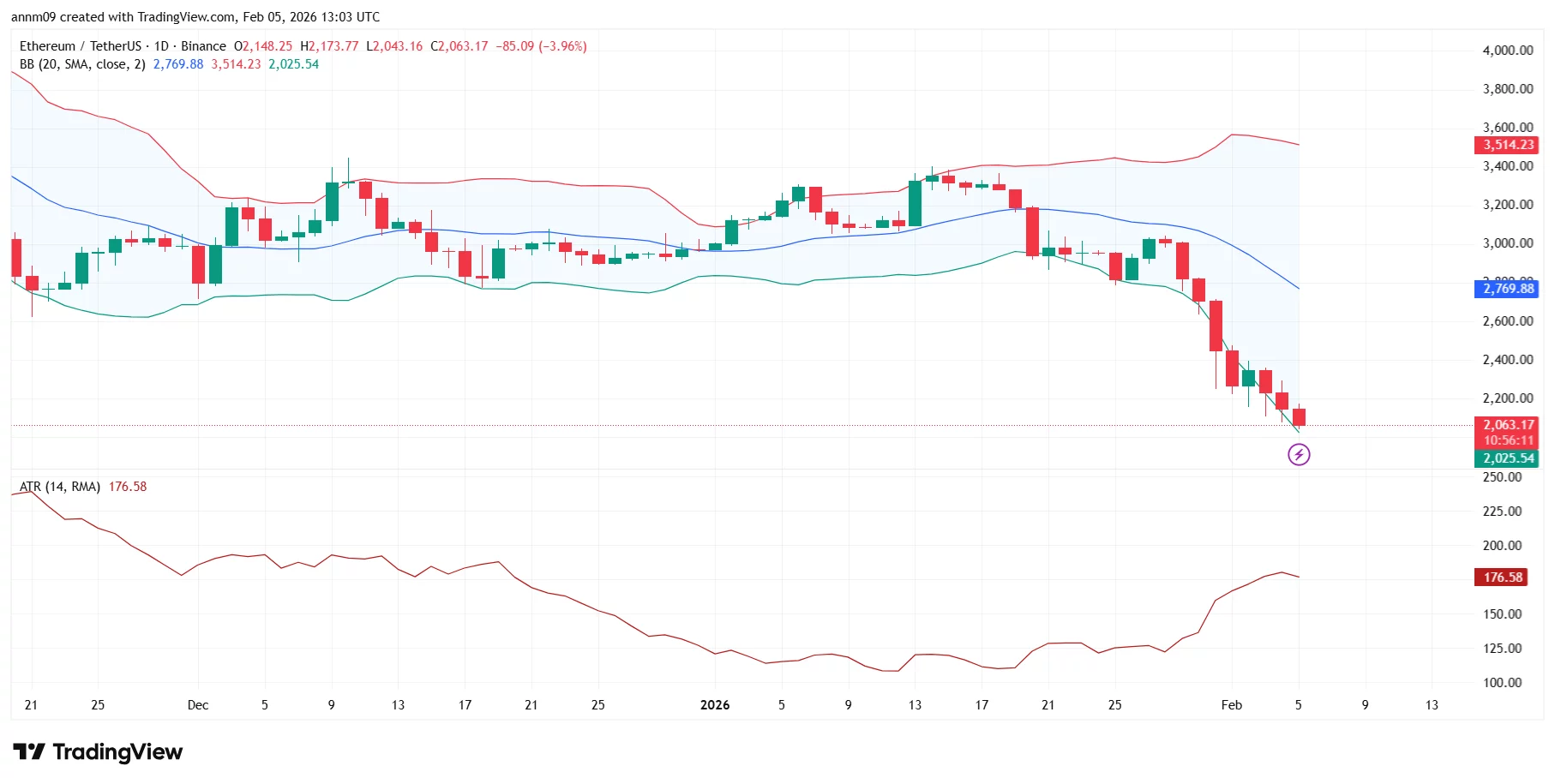
ATR on Ethereum has also begun to rise, but remains well below levels typically associated with stress events. The lack of relative strength suggests traders are not differentiating between major assets.
Instead, the market is being treated as a single risk trade, with exposure reduced across the board.
Bitcoin dominance stays elevated as risk appetite fades
Bitcoin dominance has remained elevated near the 59–60% range. The metric has held close to its 20-day moving average despite the broader pullback in prices.
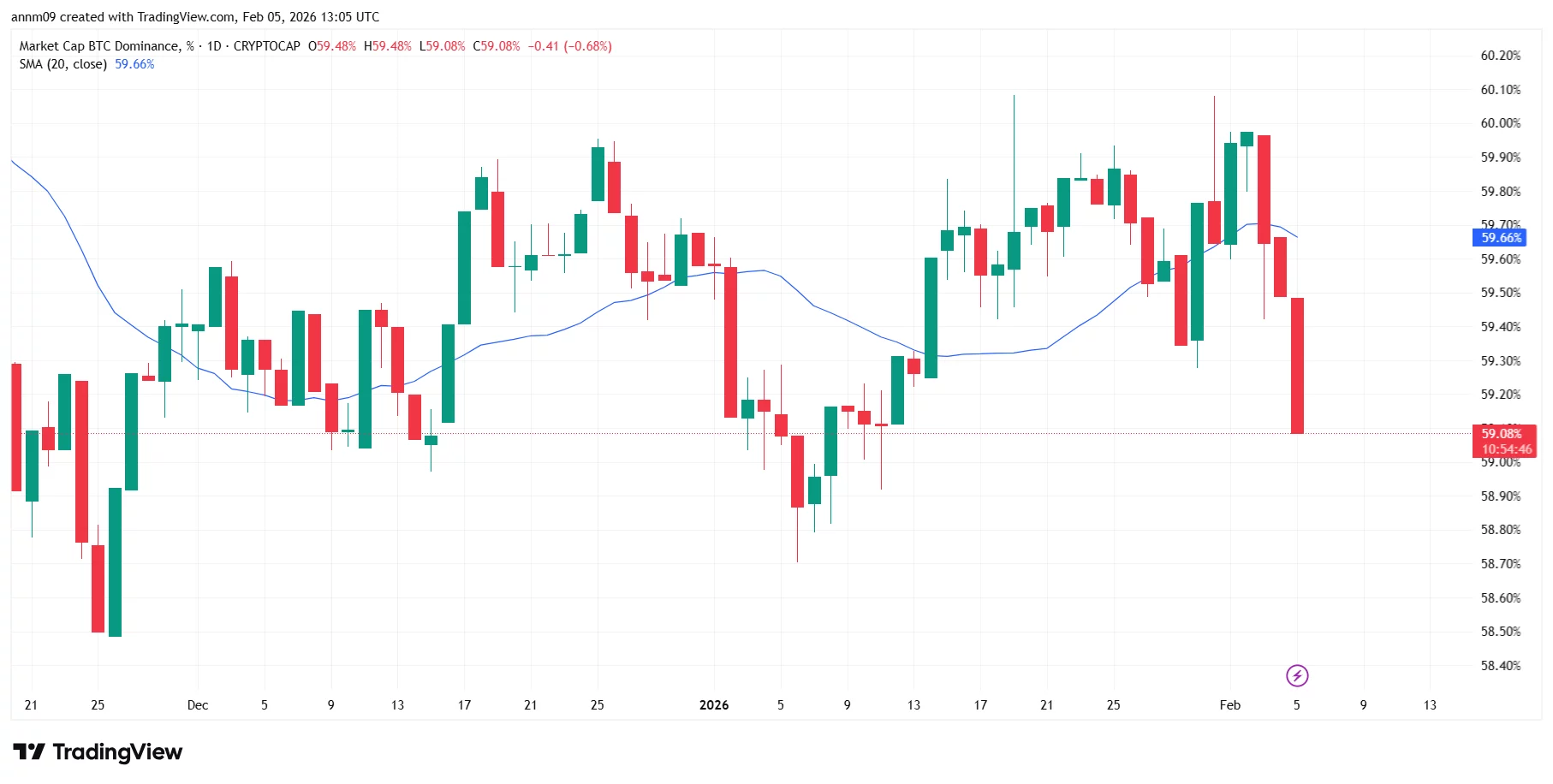
In stronger risk-on phases, declines in Bitcoin often lead to capital rotating into Ethereum and altcoins, pushing dominance lower. That pattern has not emerged. The absence of a sustained drop in dominance points to a defensive posture among traders.
Rather than reallocating within crypto, participants appear to be stepping back altogether.
Taken together, the three charts describe a market in wait-and-see mode. Prices are falling, but without the volatility spikes that typically signal panic. Volatility has expanded, but only from compressed levels. Participation remains thin, and risk appetite remains muted.
Until a clear catalyst emerges, crypto markets are likely to remain cautious, with traders focused more on capital preservation than positioning for the next rally.


