
Japan is preparing its financial system for a world of stablecoins and tokenized assets, with banks, regulators and financial conglomerates working to bring the yen economy onchain.
The country is the world’s fourth-largest economy, and its yen is one of the most important currencies in global finance. According to the International Monetary Fund, the yen accounted for 5.82% of global foreign exchange reserves, ranking third worldwide.
A major reason for the yen’s systemic importance is the carry trade. Due to low interest rates, investors borrow cheap yen, convert it into other currencies and invest in higher-yield assets, making the yen one of the most trusted funding currencies for global markets.
Still, Japan’s central role in global finance has not been represented in the blockchain economy. That began to change after US President Donald Trump took office in January last year, which accelerated crypto policy discussions worldwide.
Like the US, Japan’s ruling party has stated its ambition to become a global center of Web3. Achieving that goal may depend on stablecoins capable of bringing the yen onchain. However, retail crypto activity in Japan remains relatively muted, even though the local industry is backed by some of the largest financial conglomerates and banks.
Japan’s crypto industry has the blessings of the government and conglomerates
Sanae Takaichi became Japan’s first female prime minister in October 2025. In just a few months in office, she dissolved the lower house for a snap election. Her Liberal Democratic Party (LDP) secured a two-thirds supermajority victory on Feb. 8, and lawmakers voted to reelect Takaichi for a second term 10 days later.
Startale Group CEO Sota Watanabe told Cointelegraph that she is widely seen as politically and strategically aligned with the Trump administration, which is accelerating local crypto adoption.
In April 2024, Takaichi’s LDP released a Web3 white paper to state its ambition to “make Japan the center of Web3.” The document outlined 11 crypto issues to address “immediately,” including income tax reform for individuals, stablecoins and security tokens.

Those priorities are also set in the blockchain strategy of SBI Group, which is one of the largest financial conglomerates in Japan, led by Yoshitaka Kitao.
“Kitao-san is the best person to commit to the crypto revolution in Japan because he created SBI under the evolution of the internet,” said Watanabe, whose Startale Group co-developed SBI’s Strium blockchain. The layer 1 aims to become the settlement infrastructure for institutional trading of tokenized equities and real-world assets (RWAs).
Kitao previously held executive positions at Nomura, Japan’s largest securities broker, and later at SoftBank alongside Masayoshi Son, who is second in Forbes’ Japan rich list. Kitao then founded SBI for SoftBank.
Related: Japan’s new crypto tax could wake ‘sleeping giant’ of retail investors
Watanabe claimed that SBI views crypto’s next onchain evolution as securities and stocks, though that requires the green light from the government.
“Right now, it is easy to make a derivative onchain, but to implement actual onchain dividends, actual voting rights of the stock, it needs to be regulation-compliant,” said Watanabe, who added that he is in talks with the Japanese government.
Also, dividends for onchain assets can’t be paid offchain, so a yen-backed stablecoin is needed.
Why a yen stablecoin matters
Japan’s interest rates and the yen carry trade are major forces that can move markets. The Bank of Japan raised interest rates in March 2024 from -0.1% to 0.1%, its first hike in 17 years. The following July, the central bank announced a more aggressive increase to 0.25%, rattling global markets and Bitcoin (BTC).
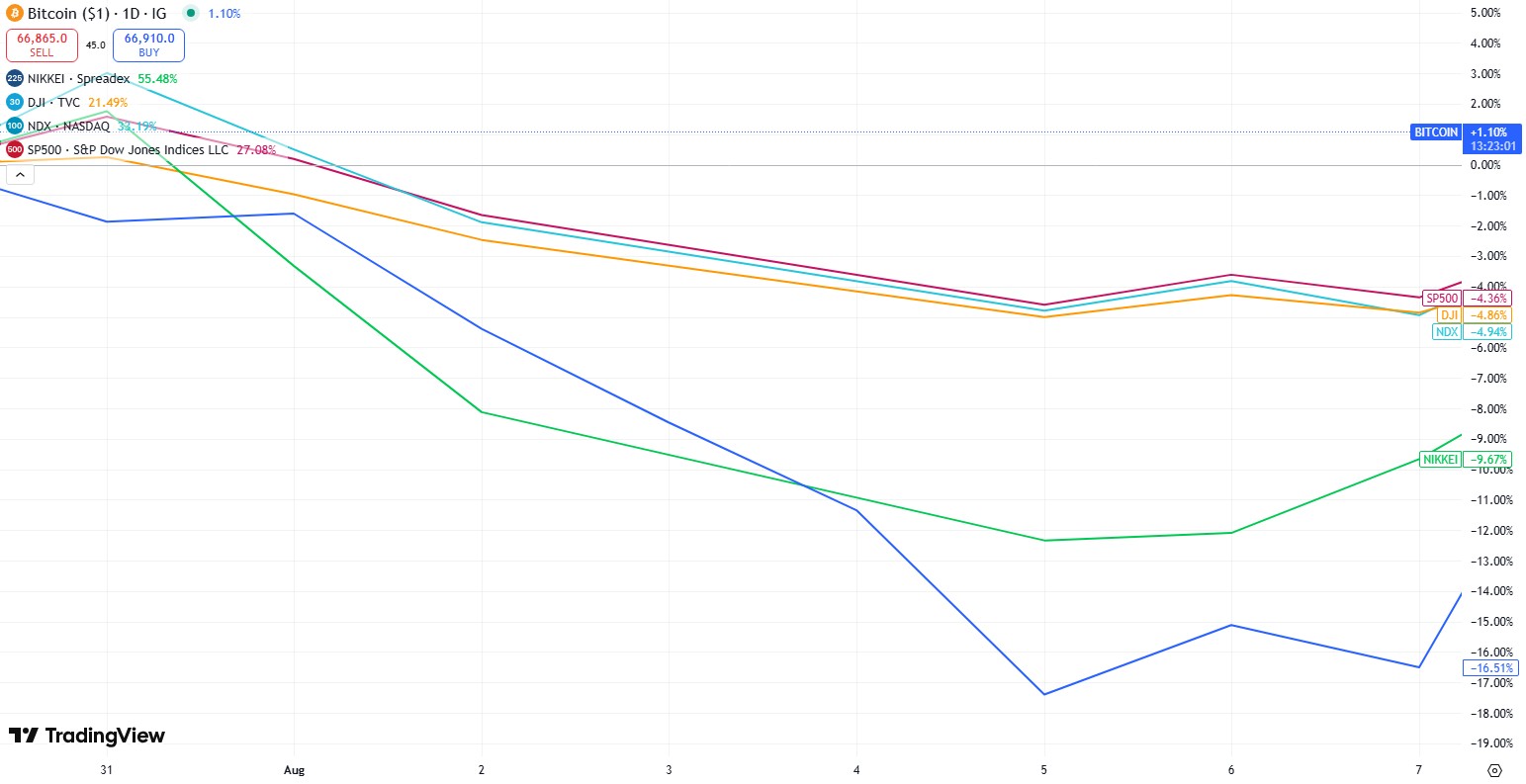
A yen-backed stablecoin could extend the carry trade into blockchain markets by bringing Japan’s low borrowing costs onchain.
For example, an investor could borrow a yen-denominated stablecoin at low interest rates. Those funds could then be used as collateral to borrow US dollar stablecoins, which can be deployed into decentralized finance (DeFi) lending, liquidity provision or other yield-generating strategies.
On Friday, Startale unveiled its own yen-backed stablecoin, JPYSC, targeting a second-quarter launch. According to Watanabe, the stablecoin is specifically designed to enable the yen carry trade onchain.
Related: Banks can’t seem to service crypto, even as it goes mainstream
“Once we implement the trust bank-backed stablecoin, it will become possible for global investors and institutions to execute the yen carry trade onchain,” he said.
Carry trades typically take time. The process can take one or two days to complete, as Japan’s and US’ business hours don’t overlap.
“But if we could do it onchain, we can do it 24/7 and instantly,” said Watanabe.
Theoretically, this could bring institutional yen borrowing to DeFi. But Justin d’Anethan, head of research at Arctic Digital, told Cointelegraph that an onchain carry trade won’t be impactful unless it comes with massive backers and a large market cap.
Watanabe told Cointelegraph that he has been in talks with the largest financial institutions in the US that are interested in carry trades and intraday swaps, though he declined to disclose names. He said that he has also been in contact with “top players” in DeFi.
The process still needs approval from Japanese authorities, while the regulatory treatment of stablecoins on bank balance sheets remains unresolved. Authorities such as the US Securities and Exchange Commission are still working to clarify capital and accounting requirements.
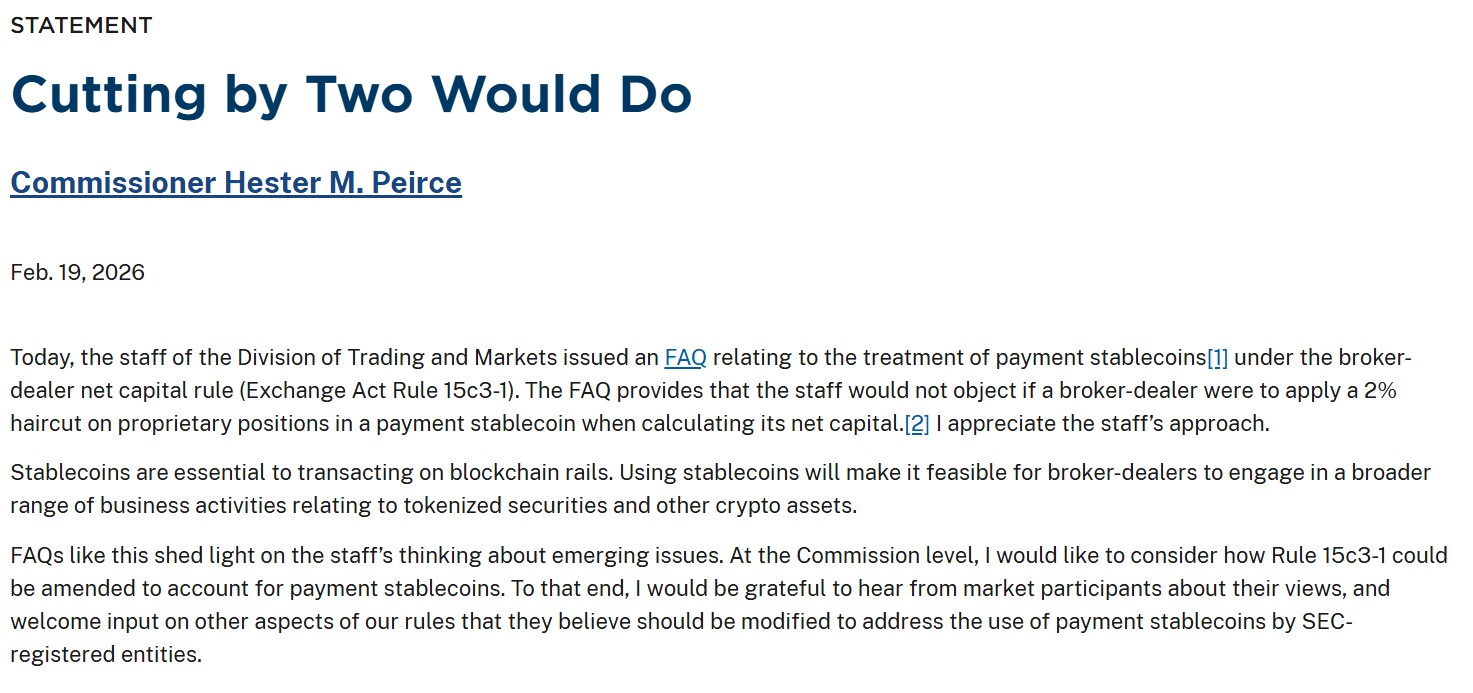
Japan’s crypto scene is accelerating, but retail is left out
A yen-backed stablecoin already exists in Japan in the form of JPYC, but it is primarily designed for payments. At the time of writing, its relatively small market capitalization of around $20 million makes it unsuitable for carry trades, which require deep liquidity and large borrowing capacity.
SBI isn’t the only financial institution exploring stablecoins in Japan. Three of the country’s largest banks — Mitsubishi UFJ, Sumitomo Mitsui Banking Corporation and Mizuho — are reportedly looking to jointly issue a yen-pegged stablecoin.
Despite the interest from local traditional finance giants and the government, the retail industry activity is muted.
The slow retail adoption is often blamed on the up-to-55% tax levy crypto investors face. That could also be shifting. Japan is exploring the reclassification of crypto from a payment tool to a financial product, which would drop the crypto tax to 20% and allow for exchange-traded funds based on crypto.
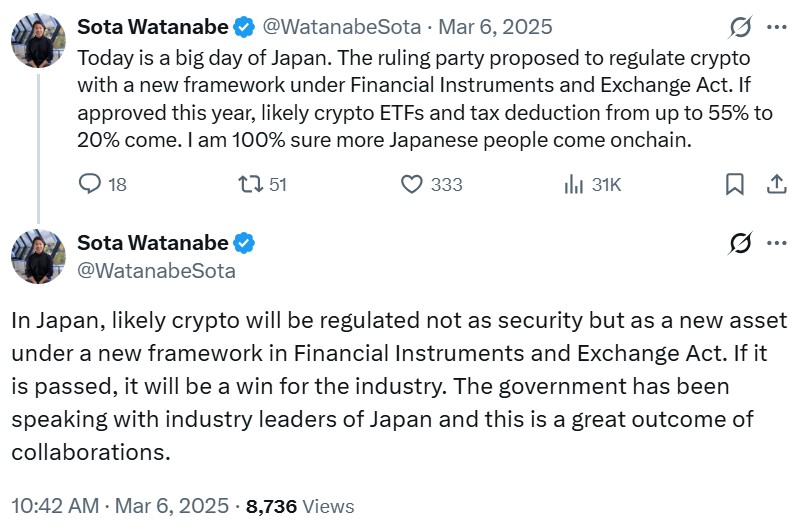
The tax deduction reform is expected to start from 2028. This isn’t good enough, according to Watanabe.
“The Japanese government is very slow,” he said. “Given that the US is accelerating onchain finance, to catch up, tax deduction in 2027 is necessary.”
For decades, the yen has served as a global funding currency through carry trades, but it is largely absent in the crypto industry. Retail participation remains limited by hefty tax rules, but the government and institutions are already positioning the yen to operate inside blockchain-based capital markets.
Magazine: Is China hoarding gold so yuan becomes global reserve instead of USD?
Cointelegraph Features and Cointelegraph Magazine publish long-form journalism, analysis and narrative reporting produced by Cointelegraph’s in-house editorial team and selected external contributors with subject-matter expertise. All articles are edited and reviewed by Cointelegraph editors in line with our editorial standards. Contributions from external writers are commissioned for their experience, research or perspective and do not reflect the views of Cointelegraph as a company unless explicitly stated. Content published in Features and Magazine does not constitute financial, legal or investment advice. Readers should conduct their own research and consult qualified professionals where appropriate. Cointelegraph maintains full editorial independence. The selection, commissioning and publication of Features and Magazine content are not influenced by advertisers, partners or commercial relationships.


