Indeed, it is not. We should have the right to transact freely online, whether it’s to communicate with words or to exchange value in the form of crypto. The operation against Tornado supposes that all money sent through a mixer is necessarily dodgy, when, in all likelihood, only a portion of the $1 billion was laundered and sent to North Korea. Vitalik Buterin, for instance, used Tornado to send funds in support of Ukraine (presumably because he didn’t want to make that donation public).
In effect, as my colleague Dan Kuhn noted adroitly last year, the U.S. government is sanctioning innocent coders in an effort to carry out a national security operation. “So far unable to actually persecute North Korea itself or bring to justice any suspected hackers – who are thought to be funding the wayward country’s nuclear missiles program, no less – the U.S. government is making an example out of a couple cryptocurrency coders,” Kuhn said.
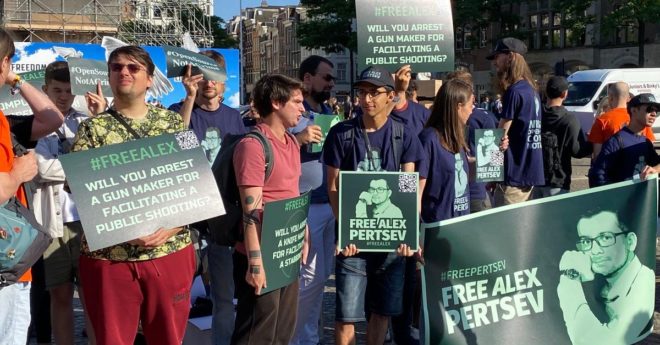
But the Tornado case is about more than privacy and even government overreach. It’s about whether governments should be able to stop transactions over open-source protocols that nobody controls. The reality of this, ironically, is proven by the very case itself. Even if Pertsev, Storm and Semenov go to prison for a dozen years, the smart contracts they created will still operate, just like Bitcoin continues to operate without a CEO or recognized founder.